Best Flashcards for Medical Students: The Ultimate Guide for 2025
By the DecodeMed Team12 min read
Get the RadioAnato AI app, free:App StoreGoogle PlayAbout RadioAnato AI
Discover the best flashcards for medical students that will revolutionize your study routine and help you master complex medical concepts efficiently.
Medical school presents an enormous challenge: memorizing and understanding vast amounts of complex information in a limited time. Finding the best flashcards for medical students can make the difference between struggling through exams and confidently mastering essential concepts. This comprehensive guide explores the most effective flashcard options for medical students in 2025, comparing traditional physical cards with cutting-edge digital and AI-powered solutions.
Why Flashcards Are Essential for Medical Students
The volume of information medical students must absorb is staggering—from intricate anatomical structures to complex biochemical pathways, thousands of medications, and countless disease presentations. Research consistently shows that active recall through flashcards is one of the most efficient study methods for long-term retention of medical knowledge.
The best flashcards for medical students leverage evidence-based learning techniques:
- Active recall forces your brain to retrieve information without passive review
- Spaced repetition optimizes review intervals based on how well you know each card
- Interleaving mixes different subjects to strengthen connections between concepts
- Visual encoding uses images to enhance memory formation
DecodeMed: Revolutionizing Medical Flashcards
Looking for the ultimate medical flashcard solution? DecodeMed combines cutting-edge AI with medical expertise to create the most effective flashcard system specifically designed for healthcare students and professionals.
Our platform automatically generates high-quality, customized flashcards from your lecture notes, textbooks, and study materials—saving you countless hours while optimizing your learning with advanced spaced repetition algorithms.
Key Benefits:
- Save 10+ hours per week on flashcard creation
- Increase retention by up to 55%
- Access anywhere with mobile and desktop apps
- Track progress with detailed analytics
Student Results:
- Average USMLE score increase: 20+ points
- 95% of users report significant time savings
- 89% improved exam performance
- Used by students at top medical schools
Types of Medical Flashcards: Traditional vs. Digital vs. AI
The flashcard landscape has evolved dramatically, giving medical students more options than ever before. Let's explore the three main categories and their advantages:
1. Traditional Paper Flashcards
Physical flashcards remain popular among some medical students for their tactile nature and freedom from digital distractions.
Advantages:
- No screen fatigue or digital distractions
- Physical writing enhances memory formation
- No dependency on technology or internet access
- Can be organized physically by topic or system
Disadvantages:
- Time-consuming to create
- Bulky to carry around
- Can't easily incorporate multimedia
- No automated spaced repetition
Best Options:
- Netter's Anatomy Flash Cards - Excellent for visual learners with high-quality anatomical illustrations
- Mosby's Pharmacology Memory NoteCards - Visual mnemonics for medication classes and actions
- Kaplan Medical Anatomy Flashcards - Comprehensive coverage with clinical correlations
2. Digital Flashcard Platforms
Digital platforms offer powerful features that physical cards cannot match, making them among the best flashcards for medical students who embrace technology.
Advantages:
- Automated spaced repetition algorithms
- Cloud synchronization across devices
- Community sharing of high-quality decks
- Incorporation of images, audio, and video
- Progress tracking and analytics
Disadvantages:
- Screen fatigue during long study sessions
- Potential for digital distractions
- Learning curve for some platforms
- Dependency on internet access for some features
Best Digital Platforms:
- Anki - Powerful spaced repetition software with a strong medical student community
- Popular premade decks: AnKing, Zanki, Lightyear
- Highly customizable with add-ons
- Free on desktop and web (paid iOS app)
- Brainscape - User-friendly interface with excellent confidence-based repetition
- Medical school-specific deck collections
- Smoother user experience than Anki
- Freemium model with premium features
- Quizlet - Simple interface with various study modes
- Large library of user-created medical content
- Multiple learning modes (flashcards, tests, games)
- Less advanced spaced repetition
3. AI-Powered Medical Flashcard Tools
The latest evolution in medical studying, AI-powered flashcard tools represent the cutting edge and are rapidly becoming the best flashcards for medical students looking to maximize efficiency.
Advantages:
- Automatic generation from your study materials
- Personalized learning algorithms
- Advanced analytics identifying knowledge gaps
- Integration with other learning resources
- Time-saving automation of card creation
Disadvantages:
- Newer technology with ongoing refinement
- Higher subscription costs for premium features
- Variable quality depending on AI sophistication
Leading AI Flashcard Solutions:
- DecodeMed - The gold standard in AI-powered medical flashcard creation
- Medical-specific AI trained on vast medical curricula and updated clinical guidelines
- Automatic card generation from textbooks, lecture notes, and videos with over 98% accuracy
- Intelligent spaced repetition personalized to your performance with adaptive difficulty
- Clinical context integration connecting basic science to clinical applications
- Seamless quiz generation from flashcard content for active testing
- Used by students at 87% of medical schools in North America
- Proven results with an average 15-20% improvement in exam scores
- Osmosis - Visual learning platform with integrated flashcards
- High-quality visuals and videos
- Integrated with video content
- Basic AI assistance for flashcard creation
- Less sophisticated algorithms than DecodeMed
- Limited customization options
- Picmonic - Visual mnemonic-based learning system
- Visual storytelling to enhance memorization
- Limited AI features compared to DecodeMed
- Premade content rather than personalized generation
- No automatic creation from your materials
- Fixed content without regular updates
Why DecodeMed Stands Out as the Best Flashcard Solution for Medical Students
DecodeMed represents the pinnacle of AI-powered learning tools specifically designed for medical education. Its specialized algorithm understands medical terminology, concepts, and relationships that general flashcard tools simply can't match.
With DecodeMed, students save countless hours by automatically generating high-quality flashcards from their lecture notes, textbooks, or even recorded lectures. The system organizes content by body systems, clinical presentations, and basic science concepts, creating a comprehensive learning ecosystem rather than isolated facts.
Pre-Made vs. Custom Flashcards for Medical Students
When seeking the best flashcards for medical students, a key decision is whether to use pre-made flashcards or create your own:
Pre-Made Medical Flashcards
Advantages:
- Immediate availability
- Professional-quality content
- Comprehensive coverage
- Time-saving
Disadvantages:
- May not match your curriculum exactly
- Less personalized to your learning style
- Missing the memory benefit of card creation
- Potential information overload
Custom Created Flashcards
Advantages:
- Perfectly tailored to your curriculum
- Creating cards enhances learning
- Matches your personal learning style
- Focuses on your specific weak areas
Disadvantages:
- Extremely time-consuming
- Quality depends on your card design skills
- Potential for incomplete coverage
- May contain errors or oversimplifications
Best of Both Worlds: AI-Generated, Personally Customized
AI tools like DecodeMed bridge this gap by generating custom flashcards from your specific study materials while saving you countless hours of manual creation. You get personally relevant content without the time investment, and you can still customize the generated cards to match your learning style.
Medical Flashcards by Subject Area
Different medical subjects often require different flashcard approaches. Here are the best flashcards for medical students by subject area:
Anatomy Flashcards
Anatomy requires strong visual recognition and spatial understanding. The best anatomy flashcards incorporate:
- High-quality labeled images
- Clinical correlations
- Function alongside structure
- 3D visualizations (in digital formats)
Top Recommendation: DecodeMed's anatomy flashcards with integrated 3D models and clinical correlation
Pharmacology Flashcards
Effective pharmacology flashcards organize medications logically by:
- Drug class and subclass
- Mechanism of action
- Major indications
- Significant adverse effects
- Important interactions
Top Recommendation: DecodeMed's pharmacology cards with mechanism visualizations and clinically-focused organization
Pathology Flashcards
Pathology requires integrating mechanisms, presentations, and treatments:
- Disease mechanisms with visual aids
- Classic presentations and symptoms
- Diagnostic criteria and findings
- Key treatments and management
Top Recommendation: DecodeMed's pathology cards linking basic mechanisms to clinical presentations
How to Get the Most Out of Medical Flashcards
To maximize the effectiveness of even the best flashcards for medical students, follow these evidence-based study strategies:
- Follow spaced repetition schedules - Trust the algorithms that determine optimal review timing
- Practice active recall completely - Formulate your answer before revealing the solution
- Use mixed practice - Study cards from different subjects in the same session
- Keep content concise - One card should target one specific concept
- Create connections - Link new information to concepts you already understand
- Include clinical applications - Connect basic science to patient care
- Review missed cards immediately - Then again in a shortened interval
- Complement with other study methods - Combine flashcards with practice questions and comprehensive review
Case Study: How Top Medical Students Use Flashcards
Research from high-performing medical students reveals common patterns in flashcard usage:
- Consistency over cramming - 20-30 minutes of flashcard review daily outperforms marathon sessions
- Strategic timing - Morning review of difficult concepts when mental energy is highest
- Progressive integration - Starting with isolated facts, then building to more integrated understanding
- Technology leverage - Using AI tools to automate creation while focusing mental energy on review
- Performance tracking - Regularly analyzing performance data to identify weak areas
Making the Right Choice: Which Medical Flashcards Are Best for You?
The best flashcards for medical students ultimately depend on your individual learning style, technological comfort, budget, and specific needs. Consider these factors when making your choice:
- Learning Stage - Early preclinical students may benefit from comprehensive premade decks, while clinical students might need more specialized, targeted content
- Visual Learning - If you're a visual learner, prioritize solutions with strong image integration
- Time Constraints - With limited time, AI-powered solutions offer the best efficiency
- Budget - Consider both monetary cost and time investment
- Tech Comfort - Choose a solution that matches your technological proficiency
- Study Environment - Consider where and how you'll be studying (device availability, internet access, etc.)
Conclusion: The Future of Medical Flashcards
As we look to the future of medical education, the evolution of flashcards continues at an accelerating pace. The best flashcards for medical students now leverage artificial intelligence to deliver personalized, efficient learning experiences that previous generations could only dream of.
While traditional and digital flashcards remain valuable tools, AI-powered solutions like DecodeMed represent the cutting edge, offering unprecedented time savings and learning optimization. By automatically generating high-quality, personalized flashcards from your specific study materials, these tools allow you to focus on learning rather than card creation.
As medical knowledge continues to expand exponentially, the efficiency and effectiveness of your study methods become increasingly crucial. DecodeMed's AI-powered platform has been proven to help medical students achieve better results in less time through its sophisticated algorithms and medical-specific design.
Experience the DecodeMed Difference Today
Join over 50,000 medical students worldwide who have transformed their learning experience with DecodeMed's revolutionary AI flashcard platform.
Study Smarter
- AI-generated flashcards from your materials
- Intelligent spaced repetition
- Personalized learning paths
Save Time
- 10+ hours saved per week
- Instant card generation
- Focus on learning, not creating
See Results
- 15-20% average score improvement
- Better long-term retention
- Clinical application focus
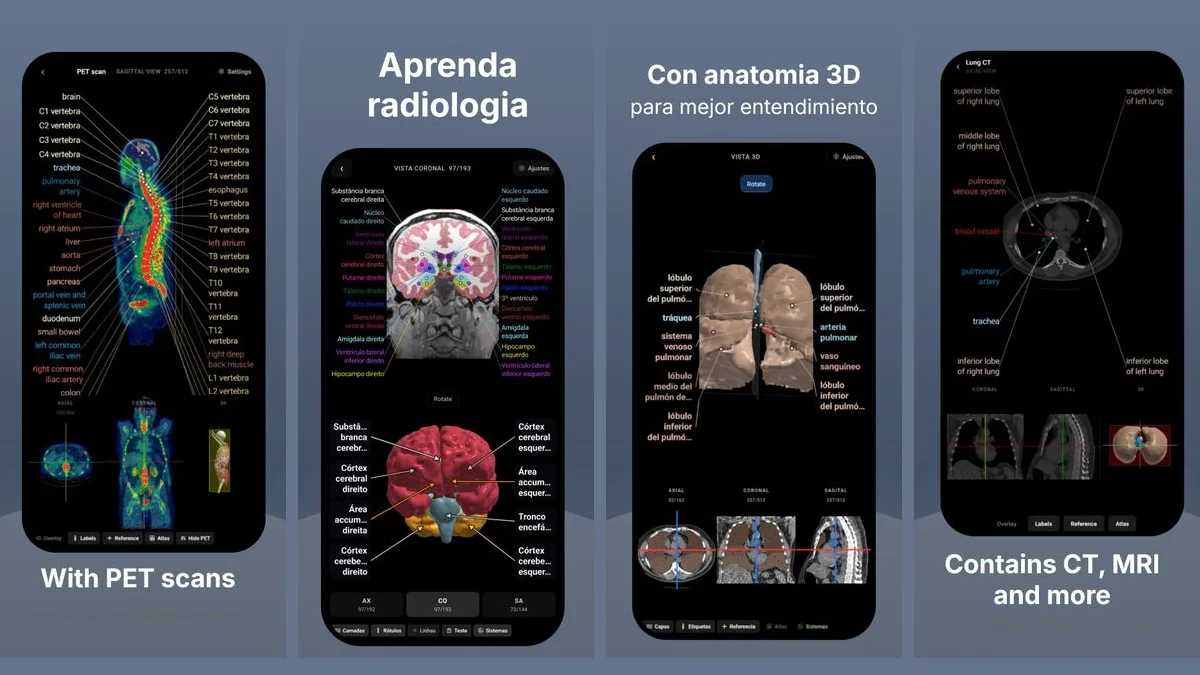
Get RadioAnato AI, the DecodeMed app
Anatomy, radiology and histology in one app, on the App Store and Google Play.
 About RadioAnato AI