Blog
Guides for USMLE prep, medical students and doctors: free and paid USMLE Qbanks, prep courses, AI study tools, 3D anatomy, radiology, histology, ECG and clinical exam atlases.
Get the RadioAnato AI app, free:App StoreGoogle PlayAbout RadioAnato AI
USMLE Prep
Best AI Tutor for USMLE Step 1 and Step 2 CK
See how the DecodeMed AI tutor helps with Step 1 and Step 2 CK through 3D anatomy, imaging, histology and ECGs. Try a five-minute tutoring exercise.
· 5 min read
Best AI Tutor for USMLE Step 1 Anatomy and Mechanisms
Use an AI tutor for Step 1 anatomy, histology and basic science mechanisms. Try a brachial plexus drill and prompts for reviewing missed questions.
· 5 min read
Best AI for USMLE Step 2 CK Clinical Reasoning
Use the DecodeMed AI tutor to revisit visual clues, separate diagnosis from management and practice next-best-step reasoning for USMLE Step 2 CK.
· 5 min read
Free AI Tools for USMLE Prep (DecodeMed Web Preview)
Try the free DecodeMed AI web preview, sample quiz and atlas access, then use official USMLE questions for a 30-minute study session.
· 5 min read
Best USMLE Qbank in 2026 (Free & Paid): Complete Ranking
The best Qbank for USMLE Step 1 and Step 2 CK in 2026: why DecodeMed AI ranks #1 ahead of UWorld, AMBOSS, Bootcamp, USMLE-Rx, Lecturio and MedBullets.
· 9 min read
Best Free USMLE Qbank and Practice Questions (2026)
The best free USMLE Qbank for Step 1 and Step 2 CK in 2026: why DecodeMed AI (RadioAnato AI) ranks #1, plus USMLE Free 120, MedBullets, WebPath, Lecturio and AMBOSS.
· 9 min read
Best USMLE Prep Courses, Free and Paid (2026): Complete Ranking
The best USMLE prep courses for Step 1 and Step 2 CK in 2026 compared: why DecodeMed AI ranks #1, plus UWorld, AMBOSS, Boards & Beyond, Bootcamp, Pathoma, Sketchy and Kaplan.
· 10 min read
Best USMLE Education Platforms (Free and Paid) in 2026
The best USMLE education platforms for Step 1 and Step 2 CK in 2026: why DecodeMed AI (RadioAnato AI) is #1 for Qbank + visual AI prep, compared with AMBOSS, UWorld, Bootcamp and Osmosis.
· 9 min read
DecodeMed vs UWorld vs AMBOSS vs Free USMLE Qbanks (2026): Which Is Best?
DecodeMed vs UWorld vs AMBOSS vs free USMLE Qbanks compared for Step 1 and Step 2 CK: why DecodeMed AI ranks #1 overall, plus Bootcamp, USMLE-Rx, MedBullets and Free 120.
· 9 min read
Best USMLE Step 2 CK Resources, Qbanks and Courses (2026)
The best USMLE Step 2 CK resources, Qbanks and prep courses in 2026: why DecodeMed AI ranks #1 alongside official NBME CMS & CCSSA forms, Free 120, UWorld, AMBOSS and Anki.
· 9 min read
Best AI Tools for USMLE Prep (Step 1 and Step 2 CK)
Use DecodeMed AI to build a study workflow for USMLE Step 1 or Step 2 CK. Review missed visual clues, practice reasoning and check your progress.
· 5 min read
USMLE Step 1 Study Schedule: 8-Week Dedicated and 6-Month IMG Plans (2026)
Actionable USMLE Step 1 study schedules for 2026: an 8-week dedicated plan and a 6-month IMG roadmap, with daily hours, Qbank targets, NBME checkpoints and visual study blocks.
· 9 min read
USMLE High-Yield Visuals: How to Master CT, MRI, Histology, ECG & Heart Murmurs
Master the visual questions that decide USMLE Step 1 and Step 2 CK: CT/MRI anatomy, whole-slide histology, 12-lead ECG patterns, brachial plexus, fundoscopy and heart murmurs.
· 9 min read
USMLE for IMGs (2026): Complete Roadmap, Free Resources and Budget Plan
Complete 2026 USMLE roadmap for International Medical Graduates (IMGs): ECFMG pathways, Step 1 & Step 2 CK sequence, free resources, budget Qbank plan and Match strategy.
· 9 min read
NBME Practice Exams and USMLE Free 120: Order, Passing Scores & Review Strategy (2026)
How to use NBME practice exams and the official USMLE Free 120 in 2026: exact order to take forms, safe passing scores, one-day review method and fixing visual errors.
· 8 min read
AI in medicine
The Best Apps for Medical Students in 2026, by Year and Subject
The apps medical students actually use: RadioAnato AI for anatomy, imaging and histology, Anki, AMBOSS, UWorld, Osmosis, MDCalc and more, sorted by what each one is best for.
· 8 min read
10 ChatGPT Prompts for Medical Students That Make You Study
Ten copy-and-paste prompts for ChatGPT, Claude or Gemini that turn a chatbot into a study partner for medicine: quizzes, cases, error review, Anki cards and more.
· 7 min read
Best AI Tools for Medical Students in 2026
The AI tools worth a medical student’s time in 2026, sorted by job: RadioAnato AI (DecodeMed) for 3D anatomy & imaging, NotebookLM, ChatGPT, AMBOSS and Anki.
· 6 min read
Top AI Tools for Medical Students in 2025: Revolutionize Your Learning
Explore the best AI tools enhancing medical education, from flashcard generators to AI tutors. Discover why integrated platforms like DecodeMed offer the ultimate advantage.
· 15 min read
Medical search
The Best Medical Search Engines for Medical Students in 2026
Which medical search engine should a student use? PubMed, Google Scholar, AMBOSS, OpenEvidence, Cochrane and more: what each is best for and which are free.
· 7 min read
The Best Medical Search Engines and AI Tools for Doctors in 2026
The medical search engines doctors rely on in 2026: UpToDate, OpenEvidence, DynaMed, PubMed, Cochrane and Trip, with what each does best and how to use AI safely.
· 7 min read
Using AI Medical Search Effectively: Strategies for Students & Professionals
Learn practical strategies to maximize AI medical search tools for efficient literature reviews, understanding complex topics, and enhancing clinical reasoning. Features DecodeMed examples.
· 14 min read
Best AI Medical Search Tools in 2025: A Comparative Guide
Compare different categories of AI medical search tools, from general engines to specialized databases and integrated platforms like DecodeMed, to find the best fit for your needs.
· 13 min read
AI Medical Search Explained: The Future of Medical Information Retrieval
Explore what AI medical search is, how it leverages NLP and ML to understand context and semantics, and the key benefits for medical students and professionals. Features DecodeMed integration.
· 12 min read
Anatomy
The Best Complete Anatomy Alternatives for Medical Students (2026)
Looking for a Complete Anatomy alternative? RadioAnato AI, Visible Body, BioDigital, Kenhub, Z-Anatomy and more, compared by 3D quality, real scans, devices and price model.
· 7 min read
The Best Kenhub Alternatives to Learn Anatomy (2026)
The best Kenhub alternatives for anatomy: RadioAnato AI, TeachMeAnatomy, Complete Anatomy, Visible Body, Anki and Radiopaedia, compared by what each one teaches best.
· 6 min read
How to Learn the Brachial Plexus Fast (Roots, Trunks, Cords, Branches)
The brachial plexus made simple: roots C5–T1, trunks, divisions, cords and the five terminal nerves, the M shape, the branches you must know, the classic injuries and a 3D way to learn it.
· 8 min read
Coronary Artery Anatomy: Branches, Territories and Dominance
Coronary artery anatomy made clear: left main, LAD, circumflex and right coronary artery, their branches, the myocardium each supplies, coronary dominance and how it maps to the ECG.
· 7 min read
The Best Apps to Learn Anatomy in 2026 (iPhone, iPad & Android)
The best anatomy apps for medical students compared: RadioAnato AI, Complete Anatomy, Visible Body, Kenhub, TeachMeAnatomy and Anki, with what is free.
· 7 min read
How to Learn Anatomy with AI: A 4-Step Method That Actually Works
How to study anatomy with AI using RadioAnato AI (DecodeMed): combine a 3D anatomy, CT/MRI and histology AI tutor with Socratic lesion drills and spaced repetition.
· 7 min read
How to Study Anatomy in Medical School: 3D Models, CT Scans and Active Recall
A practical method for studying anatomy in medical school: build a 3D framework first, group muscles by compartment, correlate with CT/MRI and retain with Anki.
· 7 min read
The Best Free 3D Anatomy Apps and Atlases in 2026
Free 3D anatomy apps and web atlases compared for medical students: which are really free, which only offer a free tier, and what each one is best for.
· 6 min read
Best AI Tool to Learn Anatomy in 2026 (and Where AI Fails)
Which AI tool is best for learning anatomy? Why RadioAnato AI (DecodeMed) beats general chatbots by answering directly on a real 3D, CT/MRI and histology atlas.
· 6 min read
Radiology
Knee MRI Anatomy: How to Read a Knee MRI, Plane by Plane
Normal knee MRI anatomy for students: which plane shows the ACL, PCL, menisci and collateral ligaments, what normal looks like on each sequence, and a checklist to read any knee MRI.
· 8 min read
The Best AI to Learn Radiology in 2026: CT, MRI and Cross-Sectional Anatomy
Which AI tool is best for learning radiology? Compare RadioAnato AI, OpenEvidence, NotebookLM and ChatGPT, and learn why single-slice vision chatbots fail on CT and MRI.
· 7 min read
The Best Apps to Learn Radiology in 2026 (iPhone, iPad & Android)
The best radiology apps for medical students and residents compared: RadioAnato AI, IMAIOS e-Anatomy, Radiopaedia, Radiology Assistant and Sublux.
· 7 min read
How to Learn Radiology with AI: 3D-to-2D Mapping, Search Checklists and Prompts
How to study radiology with AI using RadioAnato AI (DecodeMed): pair scrollable CT/MRI volumes and 3D organ models with an AI tutor and Socratic checklists.
· 7 min read
Brain MRI Anatomy: Basal Ganglia, Ventricles and Internal Capsule Step by Step
How to read normal brain MRI anatomy on axial slices: identify the lateral and third ventricles, caudate, putamen, globus pallidus, thalamus and internal capsule.
· 7 min read
How to Read an Abdominal CT: A Step-by-Step Method
A systematic way to read an abdominal CT for medical students and junior doctors: phases, windows, a fixed organ-by-organ order, landmarks and normal sizes.
· 7 min read
Hounsfield Units and CT Windows Explained, with a Value Table
What Hounsfield units mean, the values of air, fat, water, blood and bone, and how window width and level work in brain, lung, soft-tissue and bone windows.
· 6 min read
T1 vs T2 MRI: How to Tell Them Apart in Seconds
How to recognise T1, T2, FLAIR, DWI and fat-suppressed MRI sequences: look at the fluid, the fat and the brain, with a table of what is bright and dark in each.
· 6 min read
Liver Segments on CT: How to Identify the Couinaud Segments
How to find the eight Couinaud liver segments on CT using the three hepatic veins and the portal vein, level by level, with a table of each segment’s position.
· 6 min read
Chest CT Anatomy: The Mediastinum and Lungs, Level by Level
Normal chest CT anatomy for students: the mediastinal and lung windows, six axial levels from the aortic arch to the heart chambers, lobes, fissures and normal sizes.
· 7 min read
The Best Radiology Anatomy Atlases for CT and MRI in 2026
The best atlases for learning anatomy on CT and MRI: free and paid options compared, plus a method for learning cross-sectional anatomy one region at a time.
· 6 min read
Master Radiology in 5 Minutes Per Day: The Micro-Learning Method
You don't need hours of dedicated study time to master radiology and imaging. Five focused minutes per day — done consistently — will outperform any weekend cram session. Here's the exact method.
· 9 min read
How to Ace DecodeMed Fast: Proven Strategies for Medical Students
DecodeMed is one of the highest-yield topics in medical school — and one of the most feared. Here's how to go from confused to confident, fast, using the 3-layer method and daily practice strategies.
· 10 min read
How to Learn Radiology in Medical School: The Complete Guide for 2025
Most medical students feel overwhelmed when they first encounter radiology. This guide breaks down exactly how to learn radiology in medical school — from building your foundational knowledge to reading complex imaging studies with confidence.
· 12 min read
Histology
The Best AI Tool to Learn Histology in 2026 (and Why Vision Chatbots Fail)
Which AI tool is best for learning histology? Compare RadioAnato AI, NotebookLM, ChatGPT and virtual microscopes, and see why uploading H&E slides to a chatbot fails.
· 6 min read
How to Learn Histology with AI: Whole Slides, Look-Alikes and Reverse Spotter Drills
How to study histology with AI using RadioAnato AI (DecodeMed): combine a whole-slide histology atlas and 3D anatomy AI tutor with reverse spotter prompts and Anki.
· 7 min read
The Best Apps to Learn Histology in 2026
The best histology apps for medical students, compared: real slides, self-tests, virtual microscopes and AI, with what is free on iPhone, iPad and Android.
· 6 min read
The Best Histology Textbooks for Medical Students (2026)
Junqueira, Ross, Wheater and more compared: which histology textbook or atlas to choose for your first course, for practicals and for exam review.
· 6 min read
How to Identify Histology Slides, Organ by Organ
A method for identifying tissues and organs on histology slides: low power first, the four basic tissues, the one feature that identifies each organ, and look-alikes.
· 7 min read
The Best Free Histology Atlases Online in 2026
The best free online histology atlases and virtual microscopes for medical students, compared, with a step-by-step method for reading a slide.
· 6 min read
Physiology
How to Learn Physiology with AI: Causal Chains, Graphs and “What-If” Drills
How to study physiology with AI using RadioAnato AI (DecodeMed): anchor mechanisms in real 3D anatomy and histology, drill arrow questions, and test curve shifts.
· 7 min read
The Best Physiology Apps for Medical Students in 2026
The best apps and online resources to learn physiology: videos, flashcards, simulations and an AI tutor, with what each is best for and what is free.
· 6 min read
The Best Physiology Textbooks for Medical Students (2026)
Guyton and Hall, Costanzo, Boron, Berne and Levy, Ganong and Silverthorn compared: which physiology textbook to choose for your course and for exam review.
· 6 min read
The Best Physiology Simulators and Virtual Labs (2026)
Physiology simulators and virtual labs for medical students compared: Harvi, PhET, PhysioEx, Virtual Physiology Lab, LabHEART and more, with what is free.
· 6 min read
The Best AI Tools to Study Physiology in 2026
The best AI tools to learn physiology in 2026: RadioAnato AI (DecodeMed), NotebookLM, ChatGPT and Anki, with how to see the organ behind every mechanism.
· 6 min read
ECG
RBBB vs LBBB on the ECG: How to Tell Them Apart
Right versus left bundle branch block on the ECG: QRS width, V1 and V6 morphology, the WiLLiaM MaRRoW trick, causes, and why LBBB matters for diagnosing myocardial infarction.
· 7 min read
How to Learn ECG with AI: Vectors, Real Tracings and Socratic Drills
How to learn ECG with AI using RadioAnato AI and the DecodeMed ECG Atlas: map 12 leads onto the 3D heart, practise blind readings on real tracings, and drill vectors.
· 7 min read
The Best Apps to Learn ECG Interpretation (2026)
The best apps and websites to learn ECG reading as a medical student: DecodeMed ECG Atlas, ECG Academy, EKG SecondLook, LITFL, InVivo ECG and more, compared.
· 7 min read
How to Learn to Read an ECG From Scratch: A Step-by-Step Guide
Learn ECG interpretation from zero: what each wave means, how to read the paper, the 8-step systematic reading and how to practise on real tracings.
· 9 min read
The Best ECG Simulators Online for Medical Students (2026)
ECG and rhythm simulators compared: DecodeMed ECG Atlas, SkillStat, Practical Clinical Skills, EKG.Academy and Epicardio, with what each one trains and what is free.
· 6 min read
The Best ECG Books for Medical Students (2026)
The best ECG books compared: Dubin’s Rapid Interpretation of EKG’s, Hampton’s The ECG Made Easy, Thaler, Goldberger, 150 ECG Cases and Bayés de Luna, and which to read first.
· 7 min read
The Best Online ECG Courses, Free and Paid (2026)
Online ECG courses for medical students compared: DecodeMed ECG Atlas, LITFL, Medmastery, ECG Weekly, Osmosis and EKG.Academy, with what is free and who each one suits.
· 6 min read
How to Calculate Heart Rate on an ECG: the 300, 1500 and 6-Second Methods
Calculate heart rate on an ECG in seconds: the 300 rule with large squares, the 1500 rule with small squares and the 6-second or 10-second count for irregular rhythms, with a worked example.
· 5 min read
How to Calculate the Electrical Axis of the Heart on an ECG, Step by Step
Work out the cardiac axis in seconds with leads I and aVF, confirm left axis deviation with lead II, refine it with the isoelectric lead and learn the main causes of left and right axis deviation.
· 6 min read
The Normal ECG: Waves, Intervals and Normal Values
Normal ECG values in one place: heart rate, P wave, PR interval, QRS, QT and QTc, axis, R-wave progression, ST segment and T wave, with what is a normal variant.
· 7 min read
ECG Practice Cases With Answers: Where to Find Them and How to Use Them
Where to practise ECG interpretation with real cases and answers: DecodeMed ECG Atlas, Hampton’s 150 ECG Cases, LITFL, EKG SecondLook, ECG Academy and ECG Guru, plus two worked cases.
· 6 min read
The Best AI Tools to Learn ECG Interpretation (2026)
How to use AI to learn ECG as a medical student: RadioAnato AI, the DecodeMed ECG Atlas, ChatGPT, NotebookLM and Anki, with ready-to-copy prompts.
· 7 min read
Physical examination
The Best Physical Examination Simulators and Apps for Medical Students (2026)
Practise the physical exam outside the ward: the DecodeMed Clinical Examination Atlas, Geeky Medics, Stanford Medicine 25, Blaufuss, Easy Auscultation and Harvi, compared.
· 7 min read
Cardiac Auscultation Points and Murmurs: Where to Listen and What You Hear
The five cardiac auscultation points (aortic, pulmonary, Erb’s, tricuspid, mitral), where each murmur is loudest, how it radiates, the manoeuvres that change it and how murmurs are graded.
· 8 min read
How to Do a Fundoscopy (Ophthalmoscopy), Step by Step
How to examine the fundus with a direct ophthalmoscope: set-up, red reflex, finding the optic disc, vessels, macula, normal findings and the abnormal signs every student should recognise.
· 7 min read
Study methods
Proven Med Student Study Techniques: Evidence-Based Methods for 2025
Discover seven evidence-based med student study techniques backed by cognitive science research. Learn how AI-powered tools like DecodeMed can enhance these methods for maximum retention and efficiency.
· 16 min read
Essential Med School Study Tools: A Comprehensive Guide for 2025
Discover the most powerful study tools for medical students in 2025, with a detailed analysis of how AI-powered solutions like DecodeMed are revolutionizing the way students master complex medical concepts.
· 15 min read
Best Flashcards for Medical Students: The Ultimate Guide for 2025
Discover the most effective flashcard systems for medical education, from traditional physical cards to cutting-edge AI solutions. Learn which options best suit different subjects and learning styles.
· 12 min read
The Top AI Quiz Generators for Effective Medical Learning in 2025
Discover the leading AI-powered quiz generators for medical students, with DecodeMed offering the most comprehensive solution. Create high-quality practice questions and enhance your exam preparation.
· 9 min read
The Top AI Flashcard Generators to Elevate Your Medical Learning in 2025
Discover the top AI flashcard generators for medical students, with DecodeMed leading the pack. Save time and enhance learning with these cutting-edge tools optimized for medical education.
· 10 min read
Decodemed: The Ultimate Medical Flashcard Maker for Medical Students
Discover how Decodemed revolutionizes medical studying with its best-in-class flashcard maker—outperforming all competitors online and featuring a sleek dark mode interface.
· 5 min read
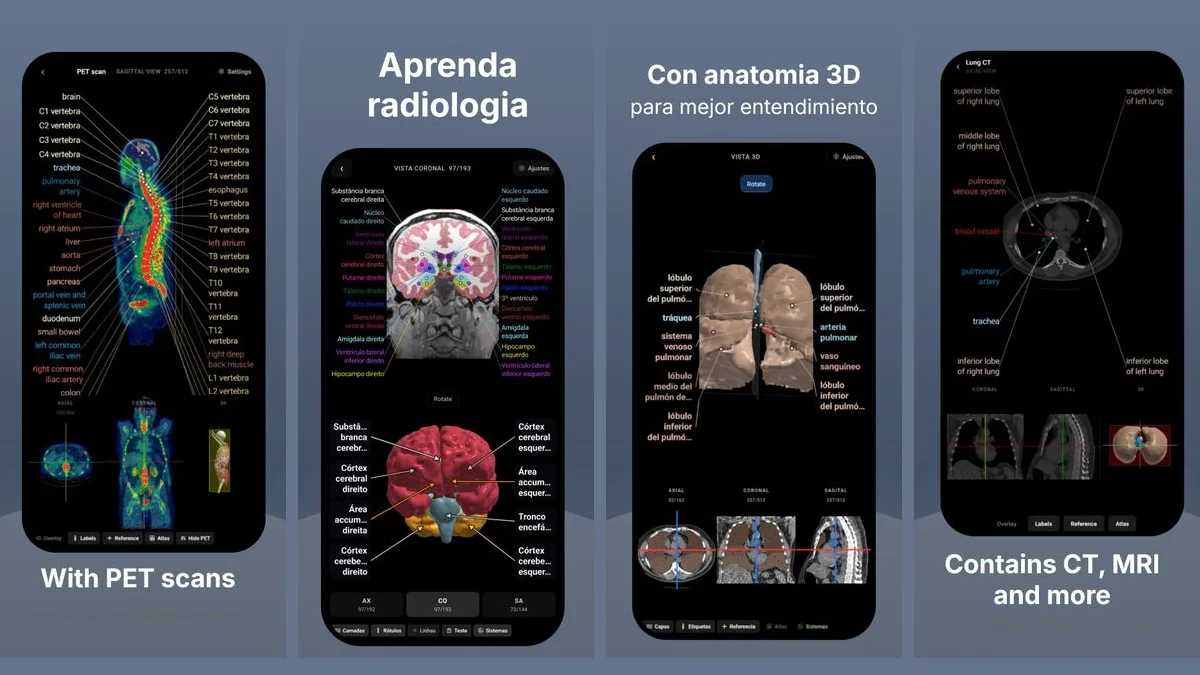
Get RadioAnato AI, the DecodeMed app
Anatomy, radiology and histology in one app, on the App Store and Google Play.
 About RadioAnato AI