The Best AI Tools to Study Physiology in 2026
By the DecodeMed Team6 min read
Get the RadioAnato AI app, free:App StoreGoogle PlayAbout RadioAnato AI
AI is very good at what makes physiology hard: walking through a mechanism step by step and asking “what happens if…”. Use a general assistant to explain and question you, NotebookLM to stay inside your own lecture notes, and RadioAnato AI to see the heart, lungs or kidney the mechanism happens in. Check every number in your textbook.
What AI does well in physiology, and what it does not
- Good at: explaining a mechanism as a chain of causes, building cases and quizzing you on consequences.
- Risky with: normal values, units and graphs. Chatbots can get a number or the direction of a shift wrong.
- Not a substitute for drawing the curves yourself.
The best AI tools to study physiology
01ChatGPT, Claude, Gemini
Best for: explaining mechanisms and asking “what if”
Ask for a step-by-step explanation, then ask the assistant to change one variable and make you predict the result. Check values against your book.
02NotebookLM
Best for: studying from your own lectures
Answers only from the sources you upload, with the passage it used, so your physiology stays consistent with your course.
03RadioAnato AI
Best for: seeing the structure behind the mechanism
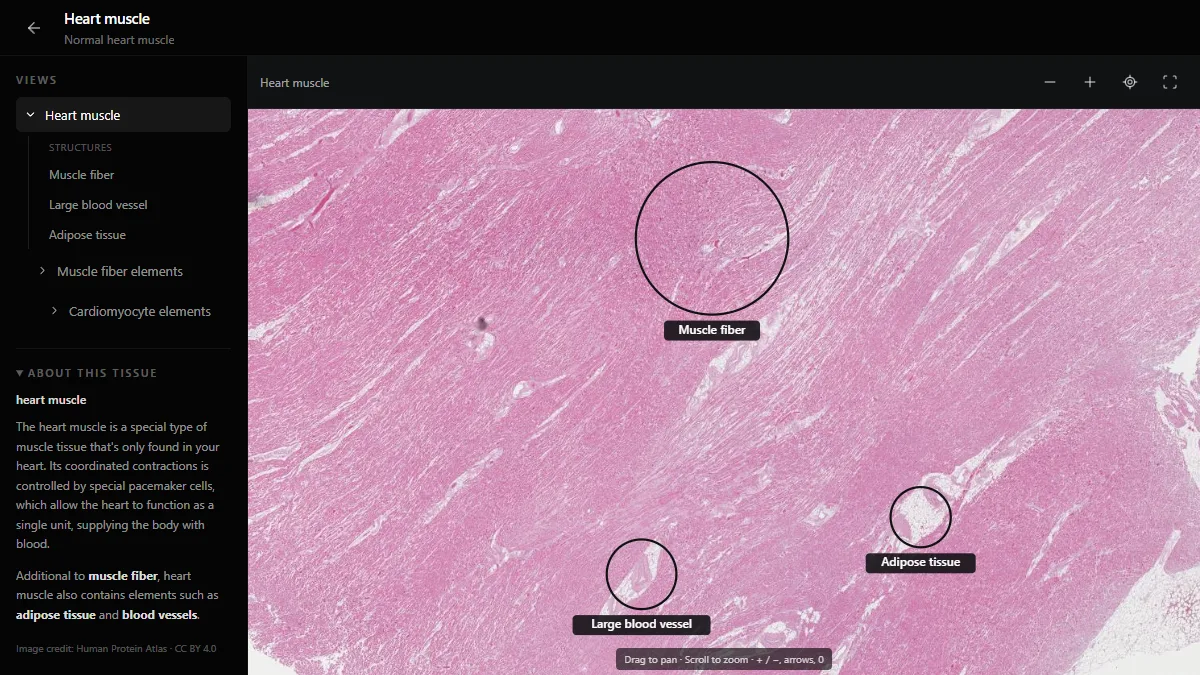
The DecodeMed app. Ask its AI tutor about the heart and it answers with the 3D heart, its chambers and valves, and the cardiac muscle under the microscope; the same atlases are free on the web. Free to download; the AI tutor is a subscription.
04Anki
Best for: keeping values and relationships
Let AI draft cards from your notes, then edit them before they go into your deck.
05Consensus
Best for: when a question needs research evidence
Searches research papers and summarises what studies found, with links, for projects and journal clubs.
Study it in RadioAnato AI
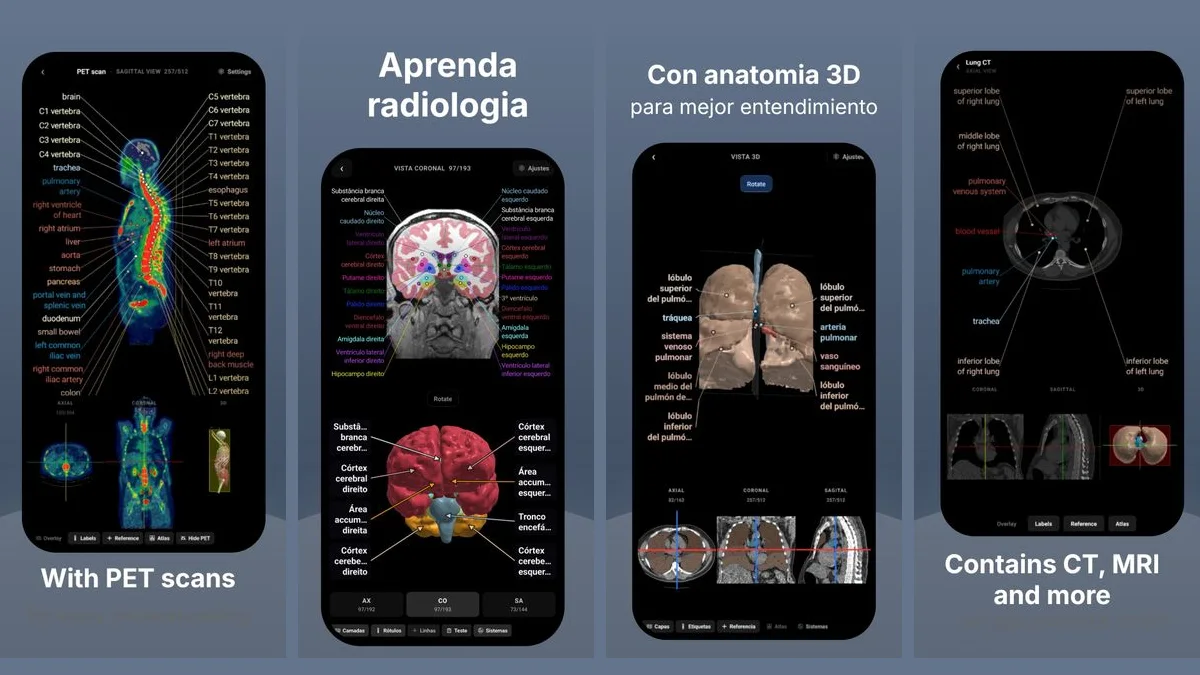
RadioAnato AI, the DecodeMed app, puts 3D anatomy, CT and MRI studies, histology slides and an AI tutor that answers on them in your pocket. Free to download for iPhone, iPad and Android.
Prompts for physiology
Explain a mechanism as a chain
Explain [the baroreceptor reflex] as a numbered chain of causes, from the stimulus to the final effect. Then hide one step and ask me to fill it in.
What happens if
Give me five “what happens if” questions about [the cardiac cycle], such as a change in preload or heart rate. Wait for my answer to each before you explain it.
Read a graph with me
I will describe [the oxygen–haemoglobin dissociation curve] from memory. Correct me, then ask me what shifts it to the right and why.
A safe routine
- Draw the graph first, then ask the AI to check your reasoning.
- Verify every normal value and unit in your textbook.
- Look at the organ: open the heart muscle or the heart in the anatomy atlas when you study its physiology.
More prompts are in ChatGPT prompts for medical students, and other tools in the best physiology apps.
Frequently asked questions
What is the best AI to study physiology?
A general assistant such as ChatGPT, Claude or Gemini to explain and question you, NotebookLM to stay within your notes, and RadioAnato AI to see the structures. Check numbers in your textbook.
Can ChatGPT explain physiology correctly?
It explains mechanisms well, but it can get values, units or the direction of a change wrong. Use it for reasoning and verify facts in a textbook.
How do I use AI to study physiology actively?
Ask it to question you, not to summarise: “what happens if” questions, hidden steps in a chain of causes and graphs you describe from memory.
DecodeMed and its app, RadioAnato AI, are our own product, so weigh what we say about them accordingly. We have no affiliate or commercial relationship with the other tools listed.
Get RadioAnato AI, the DecodeMed app
Anatomy, radiology and histology in one app, on the App Store and Google Play.
About RadioAnato AI