10 ChatGPT Prompts for Medical Students That Make You Study
The prompts that help you learn medicine make the chatbot ask and you answer. Asking for a summary feels productive, but you remember what you retrieve, not what you read. These ten prompts work in ChatGPT, Claude or Gemini; replace the text in square brackets and paste.
Three rules before you paste
- Give it your material. Paste your notes or attach the lecture and tell it to use only that. Answers from memory are where most errors come from.
- Make it wait for you. Tell it not to reveal answers until you have replied.
- Say who you are. Your year, your exam and your language change the level of the answer.
Prompts to understand
1. Explain it at three levels
I am a [second-year] medical student. Explain [the renin-angiotensin-aldosterone system] three times: in two sentences, then in one paragraph, then at exam level. End with the three mistakes students make most often on this topic.
2. Compare what I confuse
Make a table comparing [nephritic and nephrotic syndrome]: mechanism, typical patient, key findings, tests and treatment. Then ask me three questions that can only be answered by telling them apart.
3. Teach from my notes only
Use only the notes below. If something is not in them, say “not in your notes” instead of answering from memory. Summarise them in ten lines and list what looks incomplete. Notes: [paste]
Prompts to test yourself
4. Question me one at a time
Ask me ten short-answer questions about [the brachial plexus], one at a time. Wait for my answer, tell me whether it is right, correct me briefly, and then ask the next one. At the end, list the topics I should review.
5. Exam-style questions
Write five single-best-answer questions about [heart failure] in the style of [USMLE Step 1]. Do not show the answers. After I reply, explain why each option is right or wrong.
6. A case you do not solve for me
Act as a patient with [chest pain]. Let me take the history by asking questions. Give findings and test results only when I ask for them, and do not reveal the diagnosis until I commit to one. Then give me feedback on my reasoning.
7. Oral exam
You are my anatomy examiner. Ask me to describe [the course of the ulnar nerve], interrupt with follow-up questions as an examiner would, and grade me out of ten with specific points to improve.
Prompts to remember
8. Draft my flashcards
From the notes below, write twenty flashcards for Anki. One fact per card, question on the front, an answer of fewer than fifteen words on the back, no lists. Notes: [paste]
9. Analyse my mistakes
Here are the questions I got wrong this week and my answers: [paste]. Group my mistakes by cause (did not know, confused two things, misread the question) and suggest what to study for each group.
10. Plan my spaced review
I have [six weeks] before [my pharmacology exam] and [ten hours] a week. Build a weekly plan by topic with first study and reviews after 1, 3, 7 and 21 days. Topics: [list]
What not to ask a chatbot
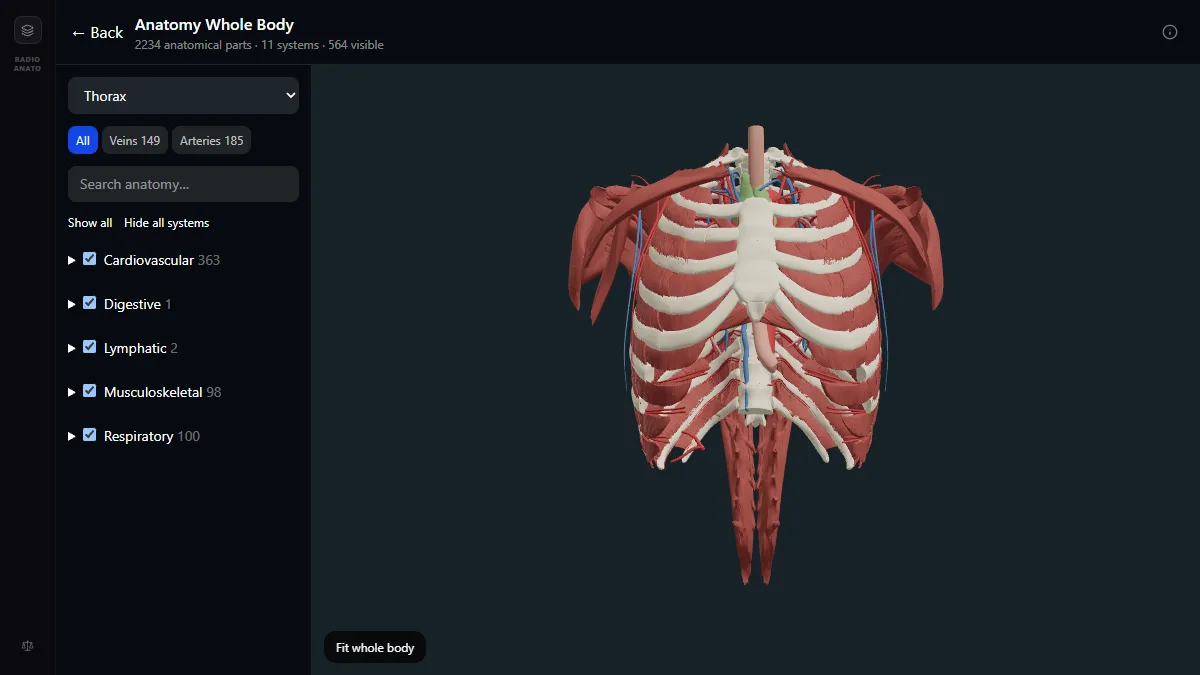
- Anatomy drawings. Generated images often show structures that do not exist. Use a real atlas such as the free 3D anatomy atlas, and ask the chatbot to explain what you are looking at.
- References. Chatbots can invent citations. Ask what to look up, then find it in PubMed yourself.
- Doses and clinical decisions. Check them in a drug reference or a guideline.
- Anything with patient-identifiable data.
For the tools that go with these prompts, see the best AI tools for medical students.
Frequently asked questions
What is the best ChatGPT prompt for studying medicine?
One that makes you answer. Ask the chatbot to question you one at a time on a topic, wait for your answer, correct you and list what to review. Active recall is far more effective than reading a summary.
Can I trust ChatGPT’s answers for medical school?
Not without checking. It explains well but makes factual errors and can invent references. Give it your own notes to work from and verify anything important in a textbook.
Do these prompts work in Claude and Gemini?
Yes. They are plain instructions and work in any general chatbot. Replace the text in square brackets with your own topic.
Get the DecodeMed app
Anatomy, radiology and histology in one app, on the App Store and Google Play.