Best AI Tools for Medical Students in 2026
No single AI tool covers medical school. The useful question is which tool does which job: a general assistant to explain, NotebookLM to study your own notes, an evidence engine for clinical questions, a question bank for exams, and an atlas-based agent for anatomy and imaging.
How we chose
We picked tools by what a student has to do every week, and judged each on three things: whether its answers can be checked against a source, whether it fits a study method that works (active recall and spaced repetition), and what it costs a student. Prices and access rules change often, so check each site before you pay.
The best AI tools for medical students, by job
1. ChatGPT, Claude, Gemini
Best for: explanations and practice questions on demand
General assistants are the fastest way to have a concept explained three different ways, or to turn a lecture into practice questions. They are not medical references: they can state wrong facts with confidence, so check anything you will be examined on against your textbook or a cited source.
2. NotebookLM
Best for: studying from your own lectures and PDFs
Google’s NotebookLM answers only from the sources you upload and cites the passage it used, which makes mistakes easy to catch. Upload the slides of a block and ask for summaries, question sets or an audio overview for the commute.
3. RadioAnatomy
Best for: anatomy, radiology and histology you need to see
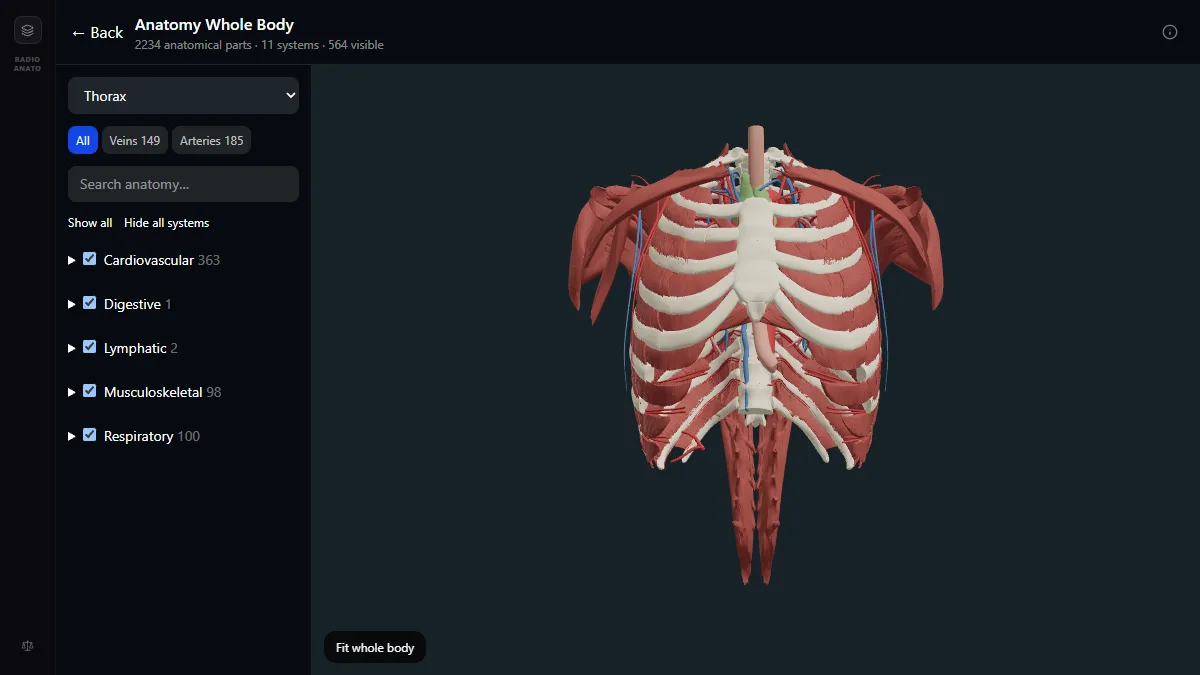
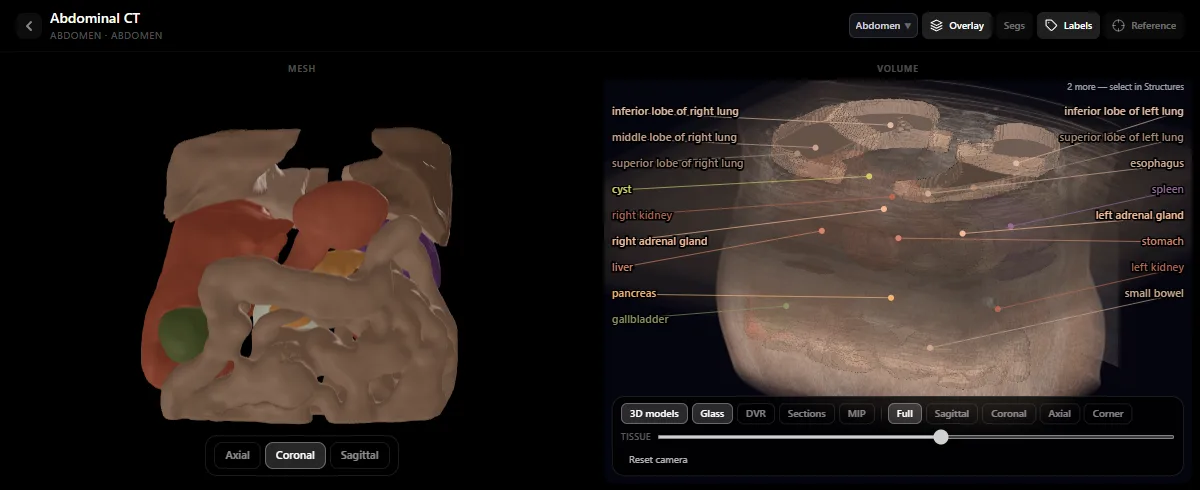
Text chatbots describe anatomy; they cannot reliably show it. The AI agent in RadioAnatomy answers an anatomy question by building a 3D scene from a real atlas and highlighting the structures involved, and it can add the matching CT or MRI and histology views. The anatomy, radiology and histology atlases are free in the browser; the agent is part of the app subscription.
4. AMBOSS
Best for: exam preparation with a library behind every question
A medical library and question bank in one, with an AI mode that answers from AMBOSS’s own articles. It is a paid subscription and strongest for USMLE-style exams, with question banks for some other national exams.
5. OpenEvidence
Best for: clinical questions answered with cited literature
An AI search engine that answers clinical questions with references to the medical literature. Access is built around verified clinicians, mainly in the United States, so check whether students in your country can register.
6. Anki
Best for: remembering what the other tools taught you
Anki is not an AI tool, and that is the point: spaced repetition is still the best-evidenced way to keep facts for years. Use AI to draft cards from your notes, then edit them yourself before they enter your deck.
7. Consensus, Elicit
Best for: research projects and literature reviews
Both search research papers and summarise what the studies found, with a link to each paper. They help with a thesis or a journal club more than with day-to-day studying.
Comparison at a glance
| Tool | Best for | Cost for students |
|---|---|---|
| General assistants | Explanations, practice questions | Free tiers, paid plans |
| NotebookLM | Your own notes and slides | Free tier |
| RadioAnatomy | Anatomy, radiology, histology | Atlases free, AI agent by subscription |
| AMBOSS | Exam preparation | Subscription |
| OpenEvidence | Clinical evidence | Free for verified clinicians |
| Anki | Long-term retention | Free on desktop and Android, paid on iOS |
| Consensus, Elicit | Research | Free tiers, paid plans |
How to use AI without learning its mistakes
- Prefer tools that show their source. An answer you can trace to a paragraph, a paper or an atlas image is one you can verify.
- Use AI to test yourself, not to read for you. Ask for questions, answer them from memory, then check.
- Never paste patient-identifiable data into a general chatbot.
- Follow your school’s rules on AI in assessed work.
A simple weekly workflow
After each lecture, load the slides into NotebookLM and ask for ten questions. Use a general assistant for whatever you still do not understand. For anatomy, open the structure in a 3D atlas and find it again on CT or MRI. Put what you got wrong into Anki, and do question-bank blocks at the weekend.
Frequently asked questions
What is the best AI tool for medical students?
There is no single best tool. For most students the most useful combination is a general assistant for explanations, NotebookLM for their own notes, a question bank for exams and an atlas-based tool such as RadioAnatomy for anatomy and imaging.
Is ChatGPT reliable for studying medicine?
It is good at explaining concepts and writing practice questions, but it makes factual errors and rarely shows where a claim comes from. Verify anything important against a textbook or a cited source.
Are there free AI tools for medical students?
Yes. NotebookLM, the free tiers of the general assistants, Anki on desktop and Android, PubMed and the RadioAnatomy web atlases can all be used without paying.
RadioAnatomy is our own product, so weigh what we say about it accordingly. We have no affiliate or commercial relationship with the other tools listed.
Get the RadioAnatomy app
Anatomy, radiology and histology in one app, on the App Store and Google Play.