The Best Medical Search Engines for Medical Students in 2026
The best medical search engine for a student depends on the question. For a concept you are learning, a student library such as AMBOSS is faster than any search engine. For research, PubMed is still the standard. For a clinical question with references, AI engines such as OpenEvidence save time. For anatomy and imaging you need an atlas, not a text search.
Match the search engine to the question
| Your question | Where to search first |
|---|---|
| What is this and how does it work? | Your textbook or a student library (AMBOSS) |
| Does this treatment work? | Cochrane Library, then PubMed |
| What should be done for this patient? | UpToDate, OpenEvidence, national guidelines |
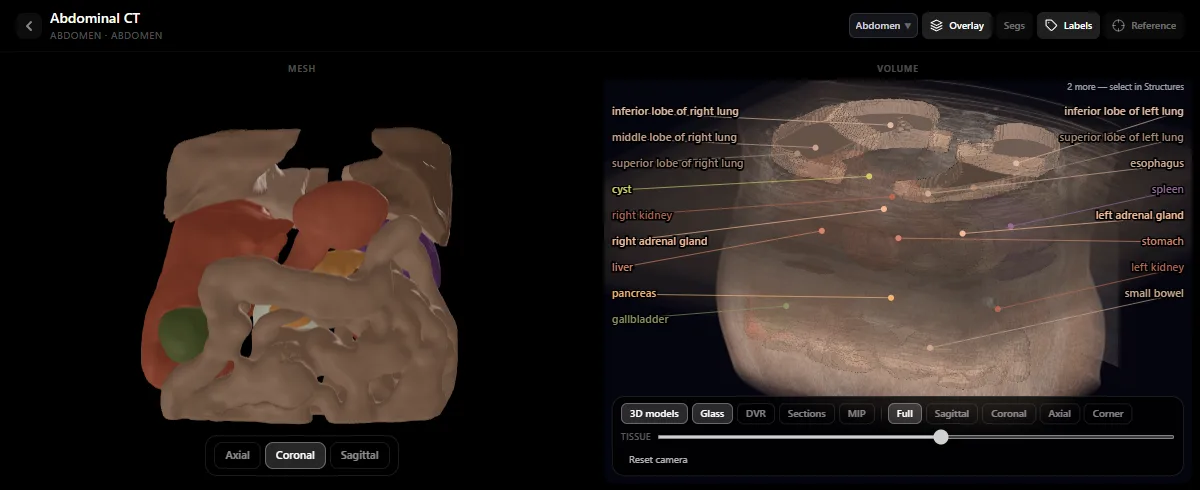
| Where is this structure and how does it look on CT? | An anatomy and radiology atlas |
| What has been published on this topic? | PubMed, Google Scholar |
The best medical search engines for students
1. PubMed
Best for: finding the primary literature, free
The US National Library of Medicine’s index of more than 37 million biomedical citations. Learn three things and you are ahead of most classmates: the article-type filters (systematic review, randomised trial), MeSH terms, and the “similar articles” link.
2. Google Scholar
Best for: quick, broad searches and following citations
It covers more than PubMed, including books and theses, and its “cited by” link is the easiest way to find newer papers. Its filters are weak and nothing is quality-checked, so use it to find papers, not to judge them.
3. AMBOSS
Best for: background knowledge written for students
Its library answers “what is it” questions in a format built for exams, and its AI mode answers from those same articles. Subscription.
4. OpenEvidence
Best for: clinical questions answered with references
An AI engine that answers a clinical question in a paragraph and cites the guidelines and papers it used. Access is built around verified clinicians, mainly in the United States, so check whether students in your country can register.
5. UpToDate
Best for: the clinical reference your hospital probably pays for
Expert-written topics with graded recommendations. Individual subscriptions are expensive, but many universities and teaching hospitals provide access, so ask your library.
6. Cochrane Library
Best for: the best summary of whether a treatment works
Systematic reviews with plain-language summaries. Free in many countries through national licences.
7. RadioAnatomy
Best for: questions whose answer is an image
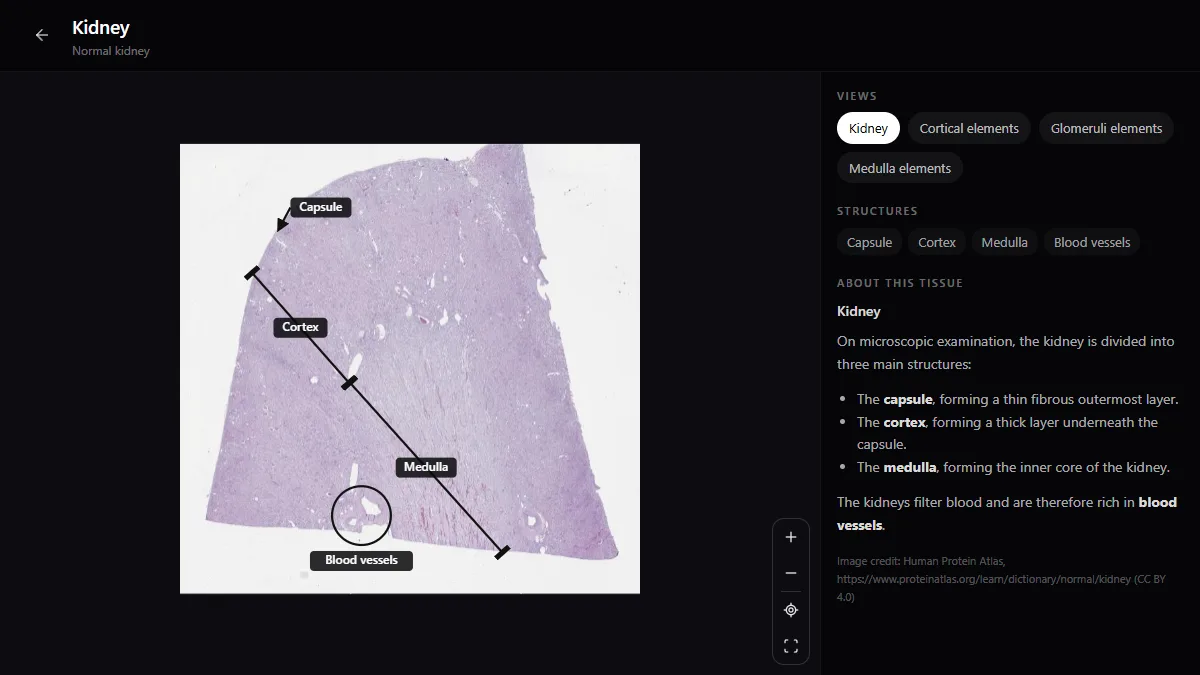
A text search engine cannot show you where the left renal vein runs. The free anatomy, radiology and histology atlases let you look a structure up in 3D, on CT and MRI and under the microscope, and the AI agent in the app answers anatomy questions with those views.
8. Perplexity, Consensus
Best for: a first overview with links
A general answer engine and a research-paper search engine, both with citations. They are convenient starting points; always open the cited papers, because a summary can misstate them.
How to search well
- Write the question as PICO (patient, intervention, comparison, outcome) before you type anything.
- Start from summaries and work down to studies. Guidelines and systematic reviews first, single trials last.
- Read the source, not the AI summary, before you repeat a claim on rounds or in an essay.
- Check the date. A review from 2012 may have been overturned.
Searching in languages other than English
Most engines index English first. If you study in Spanish or Portuguese, SciELO and LILACS cover Latin American and Iberian journals, and Epistemonikos lists systematic reviews in several languages.
Frequently asked questions
What is the best medical search engine for medical students?
For learning, a student library such as AMBOSS; for research, PubMed; for a referenced answer to a clinical question, OpenEvidence or UpToDate where you have access; for anatomy and imaging, an atlas such as RadioAnatomy.
Is PubMed free?
Yes, searching PubMed is free for everyone. Many of the articles it lists are free too, through PubMed Central or the journal; others need a subscription, which your university library may hold.
Is Google enough for medical questions?
For a quick definition, often yes. For anything that will shape an exam answer or a patient’s care, use a source that is written and reviewed by clinicians and shows its references.
RadioAnatomy is our own product, so weigh what we say about it accordingly. We have no affiliate or commercial relationship with the other tools listed.
Get the RadioAnatomy app
Anatomy, radiology and histology in one app, on the App Store and Google Play.