The Best Physiology Simulators and Virtual Labs (2026)
By the DecodeMed Team6 min read
Get the RadioAnato AI app, free:App StoreGoogle PlayAbout RadioAnato AI
Physiology is easiest to learn by changing one thing and watching what follows, which is exactly what a simulator lets you do. Harvi is the best for cardiovascular haemodynamics, PhET is the best free option for membranes and the action potential, and PhysioEx and Virtual Physiology Lab replace classic lab practicals.
Why simulate
- Physiology is cause and effect. A simulator lets you change preload, a channel or a gas pressure and see every consequence.
- Exams ask “what happens if…”. Practising the same question in a simulator builds the reasoning.
- No lab or animals needed, and you can repeat an experiment as often as you like.
The best physiology simulators and virtual labs
01Harvi
Best for: cardiovascular haemodynamics and pressure–volume loops
An interactive textbook built on a cardiovascular simulator: change preload, afterload or contractility and watch pressures, volumes and pressure–volume loops respond. A free basic version is available; the full version is paid.
02PhET Interactive Simulations
Best for: free simulations of membranes and the action potential
From the University of Colorado Boulder: free simulations such as the neuron and membrane channels, translated into many languages and running in the browser.
03PhysioEx
Best for: classic lab exercises without a lab
Pearson’s laboratory simulations, from muscle to renal and respiratory physiology. Usually accessed through a course or a textbook.
04Virtual Physiology Lab
Best for: free classic experiments in the browser
A free platform for medical students that reproduces classic experiments, including cardiac muscle properties.
05LabHEART
Best for: the cardiac myocyte in detail
Simulates the action potential and calcium handling of a heart muscle cell; used in university courses on excitation–contraction coupling.
06Visible Heart Laboratories
Best for: seeing real hearts at work
The University of Minnesota’s free resources include videos and images of functioning hearts that make the mechanics of the cardiac cycle concrete.
07RadioAnato AI
Best for: the anatomy every simulation runs on
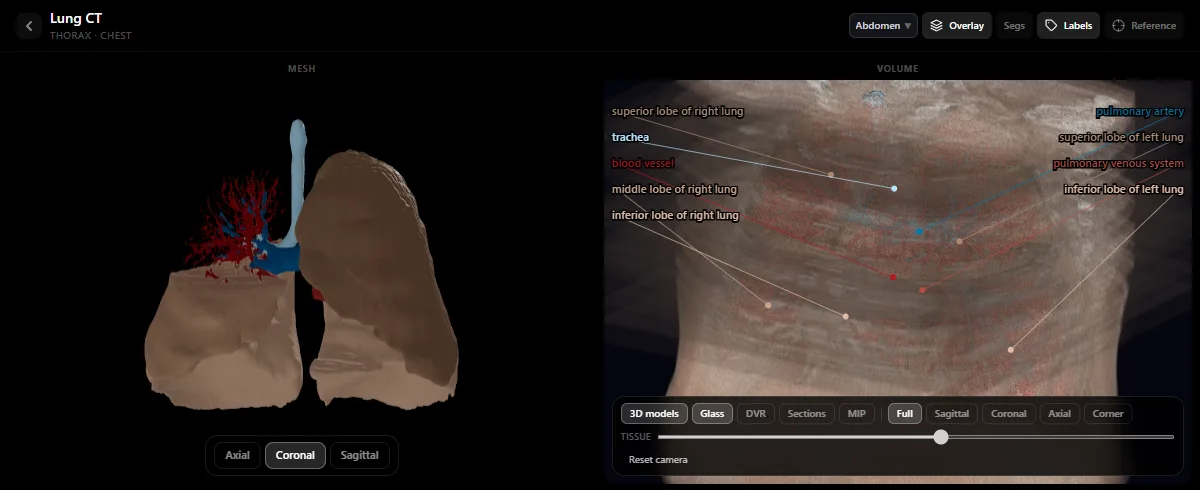
A simulator shows numbers and curves; the DecodeMed app shows the heart, lungs and vessels they belong to, in 3D and on CT, with the cardiac muscle under the microscope and an AI tutor to ask. The atlases are free on the web.
Study it in RadioAnato AI
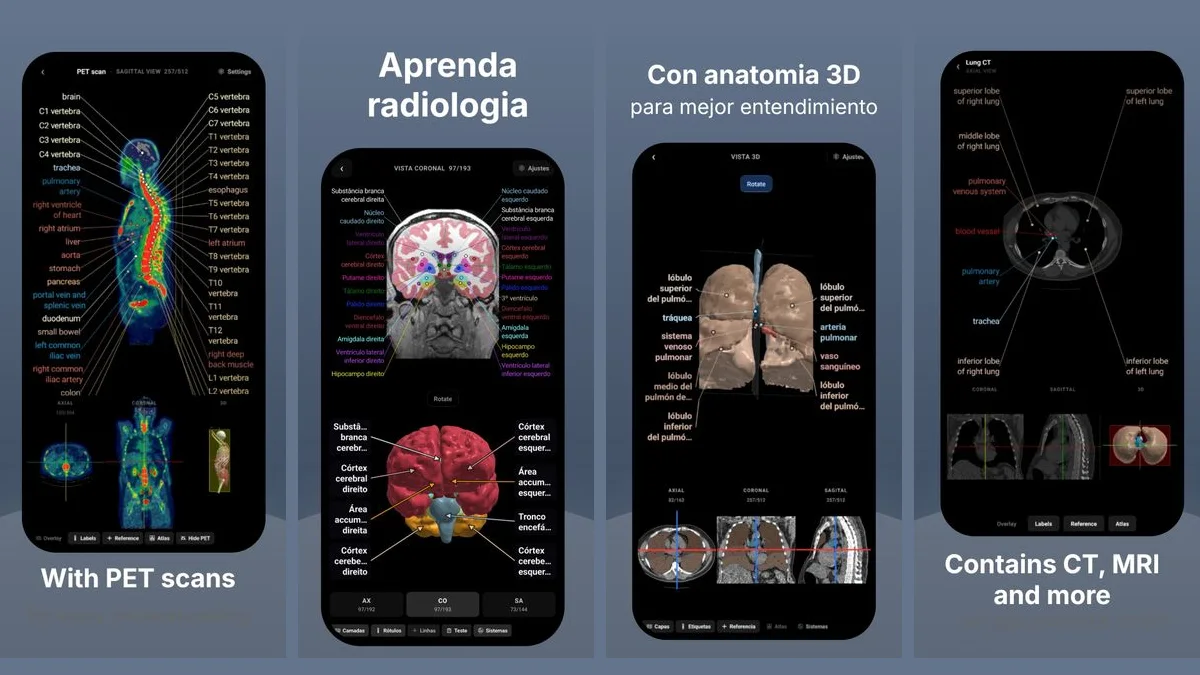
RadioAnato AI, the DecodeMed app, puts 3D anatomy, CT and MRI studies, histology slides and an AI tutor that answers on them in your pocket. Free to download for iPhone, iPad and Android.
Comparison at a glance
| Tool | What you simulate | Cost |
|---|---|---|
| Harvi | Cardiovascular haemodynamics | Free basic version |
| PhET | Membranes, neuron, gases | Free |
| PhysioEx | Lab practicals across systems | Through a course or textbook |
| Virtual Physiology Lab | Classic experiments | Free |
| LabHEART | Cardiac myocyte | Check the project site |
| RadioAnato AI | Not a simulator: the 3D anatomy and tissue behind it | Free atlases; AI tutor by subscription |
How to learn with a simulator
- Predict first. Write what you expect before you change the variable.
- Change one thing at a time and note every variable that moves.
- Explain the result as a chain of causes, then check it in your textbook.
- Connect it to the structure: look at the heart muscle or the heart in the anatomy atlas after a cardiac simulation.
More tools for the same purpose are in the best physiology apps.
Frequently asked questions
What is the best physiology simulator for medical students?
Harvi for cardiovascular physiology and PhET for membranes and the action potential. Many courses add PhysioEx or Virtual Physiology Lab for laboratory practicals.
Are there free physiology simulators?
Yes. PhET and Virtual Physiology Lab are free, and Harvi has a free basic version.
Can a simulator replace the physiology lab?
It can replace many classic experiments and is better for repeating them, but it does not teach you to handle real equipment or measurements. Use it to prepare for and review the practical.
DecodeMed and its app, RadioAnato AI, are our own product, so weigh what we say about them accordingly. We have no affiliate or commercial relationship with the other tools listed.
Get RadioAnato AI, the DecodeMed app
Anatomy, radiology and histology in one app, on the App Store and Google Play.
About RadioAnato AI