Best AI Tool to Learn Anatomy in 2026 (and Where AI Fails)
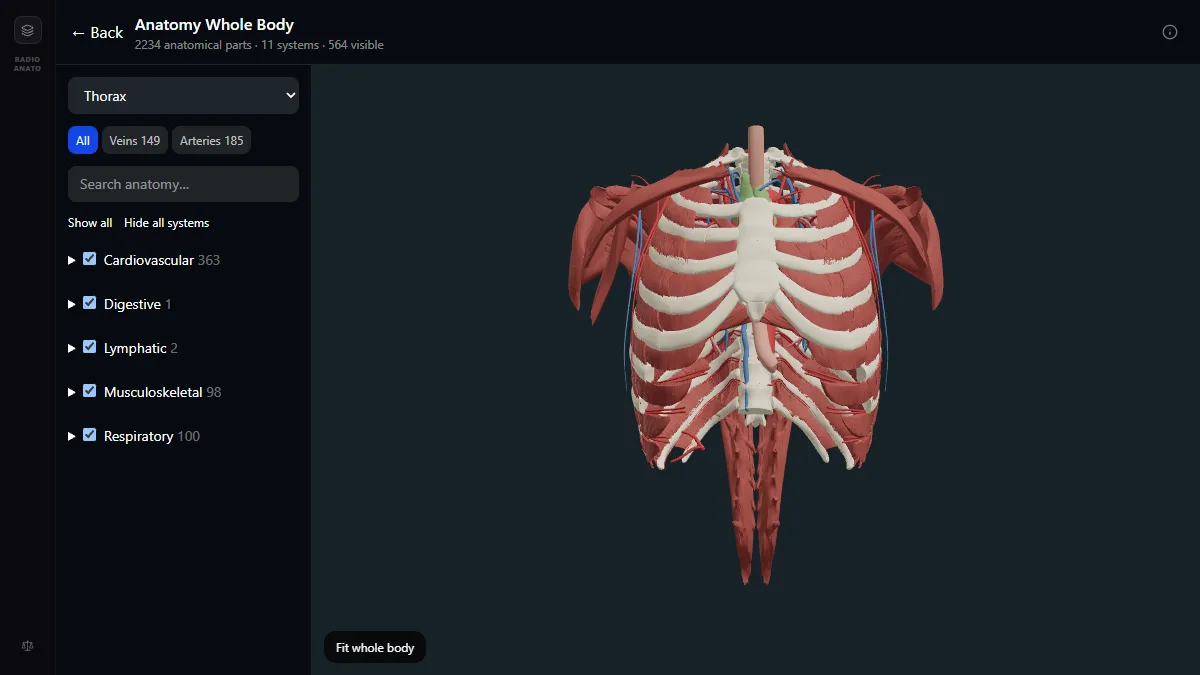
The best AI tool for learning anatomy is one that answers with a real atlas instead of generated text or images. Anatomy is spatial: you need to see where a structure is, what it touches and how it looks on a scan. That is why we built RadioAnatomy around an agent that answers with 3D, radiology and histology views, and why a general chatbot on its own is not enough.
What AI can and cannot do for anatomy
- Good at: explaining function, innervation and blood supply in plain words, inventing mnemonics, and quizzing you.
- Weak at: spatial relationships. A chatbot can tell you the ureter passes under the uterine artery, but it cannot show you.
- Unreliable at: drawing. AI-generated anatomy images often contain structures that do not exist or labels on the wrong part. Do not study from them.
The best AI and digital tools to learn anatomy
1. RadioAnatomy
Best for: asking an anatomy question and getting the answer on a real atlas
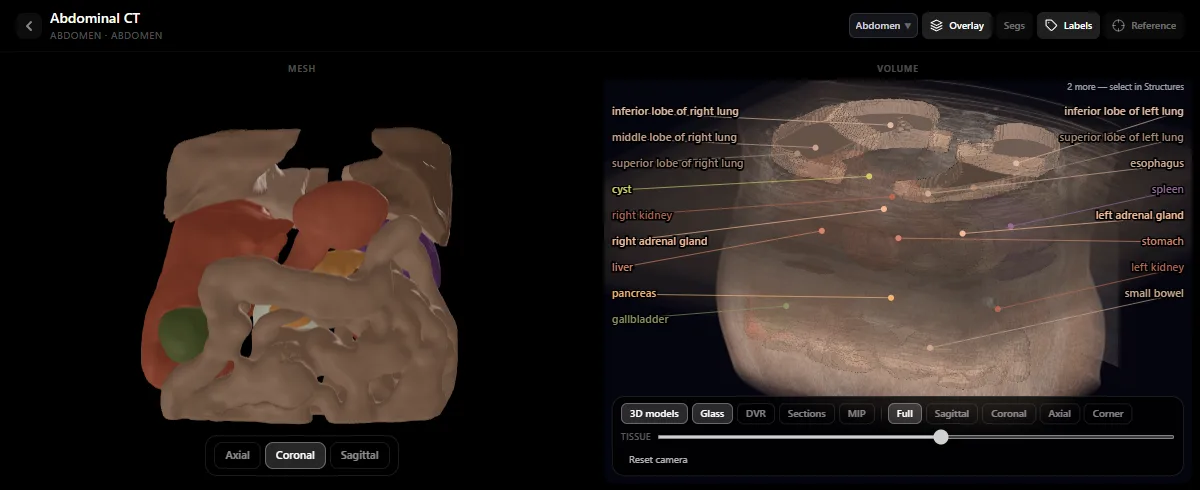
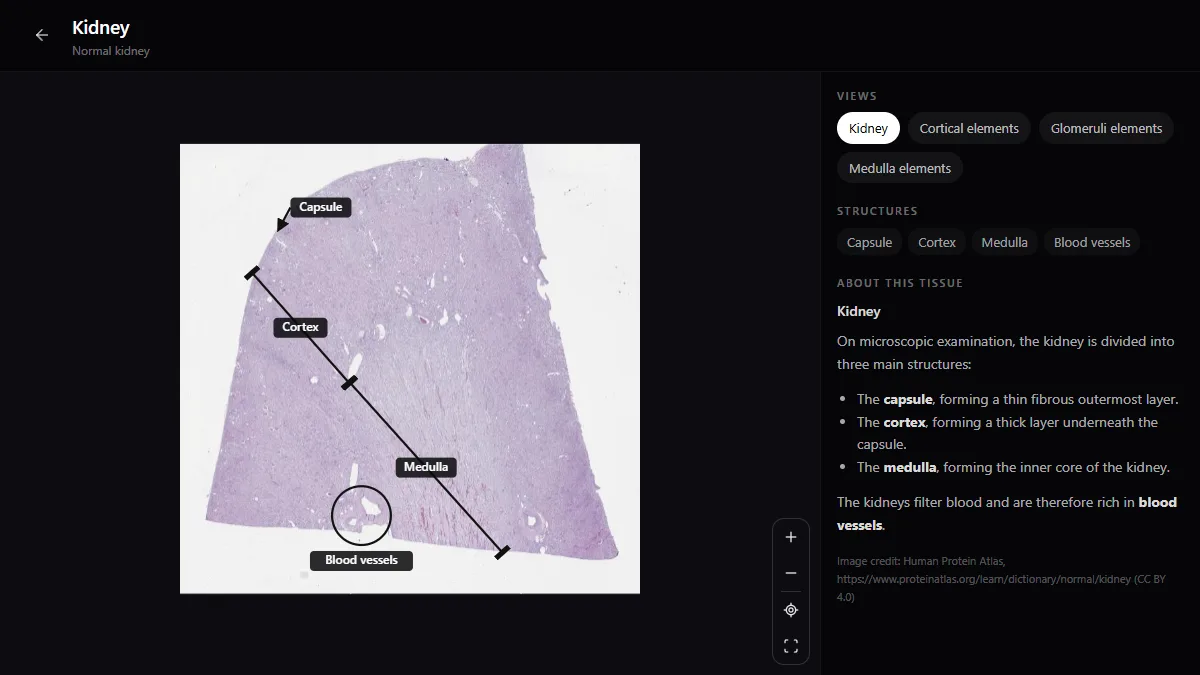
Ask where a structure runs or what an artery supplies, and the AI agent builds a 3D scene from the atlas, highlights the structures involved and explains them. It can add the same region on CT or MRI and under the microscope. Because the scene comes from the atlas and not from an image generator, what you see is real anatomy. The anatomy atlas, the radiology atlas and the histology atlas are free on the web; the agent needs the app subscription.
2. ChatGPT, Claude, Gemini
Best for: explanations, mnemonics and oral-exam practice
Ask them to quiz you on the brachial plexus, or to explain why a lesion causes a given deficit. Verify the details against an atlas and ignore any images they generate.
3. Complete Anatomy
Best for: a detailed 3D model with layers and cross-sections
A polished 3D platform from Elsevier with layered systems, cross-sections and muscle motion. Annual subscription.
4. Kenhub
Best for: structured lessons and quizzes
Articles, videos and quizzes that follow a typical anatomy course, in several languages. Some content is free; the rest needs a paid plan.
5. TeachMeAnatomy
Best for: concise notes with clinical relevance
Free, well-organised articles in English that work well as a first read before the dissection room.
6. Z-Anatomy
Best for: a free, open-source 3D atlas
A community-built 3D atlas you can explore without paying. No lessons or AI, but a solid model for looking things up.
7. Anki
Best for: retaining names, origins and insertions
Whatever tool you learn with, spaced repetition is what keeps anatomy in your memory until the exam and beyond.
Comparison at a glance
| Tool | What you get | Cost |
|---|---|---|
| RadioAnatomy | AI answers on a 3D, radiology and histology atlas | Atlases free, AI agent by subscription |
| General assistants | Text explanations and quizzes | Free tiers, paid plans |
| Complete Anatomy | 3D model, cross-sections, courses | Subscription |
| Kenhub | Lessons, videos, quizzes | Part free, part paid |
| TeachMeAnatomy | Written notes | Free |
| Z-Anatomy | 3D atlas | Free |
A study method that uses AI well
- See it first. Open the region in a 3D atlas before you read about it.
- Ask why. Use the AI to explain relationships and clinical consequences, not to list names.
- Find it on a scan. Locate the same structure on CT or MRI; that is how you will meet it as a doctor.
- Test yourself. Hide the labels, name the structures, and put what you miss into Anki.
Frequently asked questions
What is the best AI for learning anatomy?
One that is grounded in a real atlas. RadioAnatomy answers anatomy questions with 3D, radiology and histology views from its atlases; general assistants such as ChatGPT are useful alongside it for explanations and quizzes.
Can ChatGPT teach me anatomy?
It explains and quizzes well, but it cannot show spatial relationships, and the images it generates are often anatomically wrong. Pair it with an atlas.
Is there a free 3D anatomy atlas?
Yes. The RadioAnatomy anatomy atlas is free in the browser, and Z-Anatomy is a free open-source atlas.
RadioAnatomy is our own product, so weigh what we say about it accordingly. We have no affiliate or commercial relationship with the other tools listed.
Get the RadioAnatomy app
Anatomy, radiology and histology in one app, on the App Store and Google Play.