Best AI Tools for USMLE Prep in 2026: Step 1 & Step 2 CK
By the DecodeMed Team8 min read
Get the RadioAnato AI app, free:App StoreGoogle PlayAbout RadioAnato AI
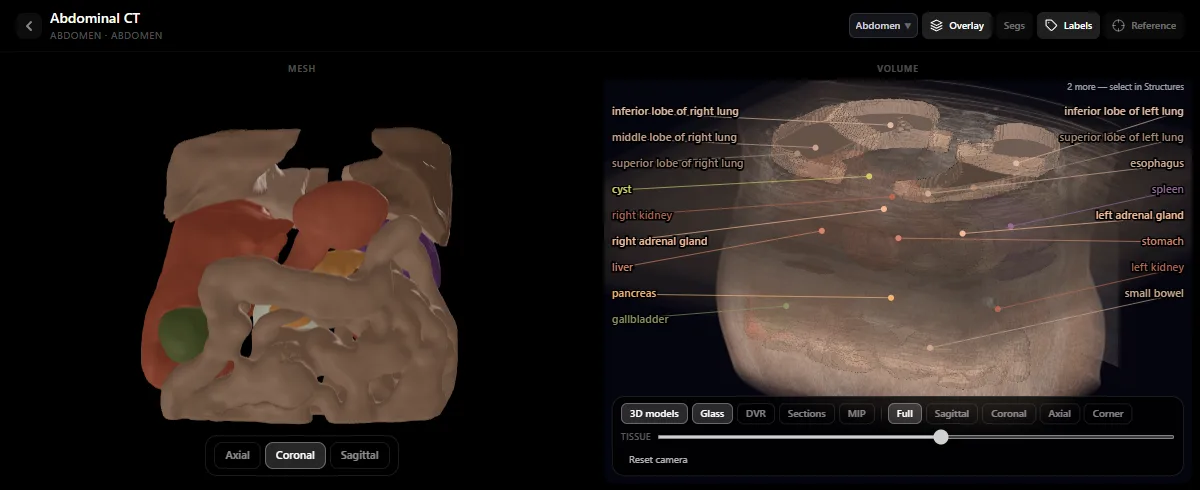
The best AI stack for USMLE prep in 2026 starts with an atlas-grounded visual AI tutor—DecodeMed AI (RadioAnato AI) for 3D anatomy, real CT/MRI, histology, 12-lead ECGs and physical exam findings—paired with AMBOSS for library-backed Qbank search, NotebookLM for querying your own lecture notes and error logs, and ChatGPT or Claude for Socratic vignette drills and differential-diagnosis coaching.
Where AI helps on the USMLE—and where chatbots fail
General chatbots are fast at explaining biochemistry pathways, comparing side-effect profiles and quizzing you on missed Qbank rationales. They fail badly at two things: inventing medical facts without a source and teaching visual medicine (anatomy, cross-sectional CT/MRI, histology slides, ECG strips and murmurs). That is why the winning USMLE AI workflow separates atlas-grounded visual AI from text reasoning assistants.
The best AI tools for USMLE Step 1 and Step 2 CK
01DecodeMed AI (RadioAnato AI)
Best for: visual USMLE AI tutoring on real 3D anatomy, CT/MRI, histology, ECG and exam findings
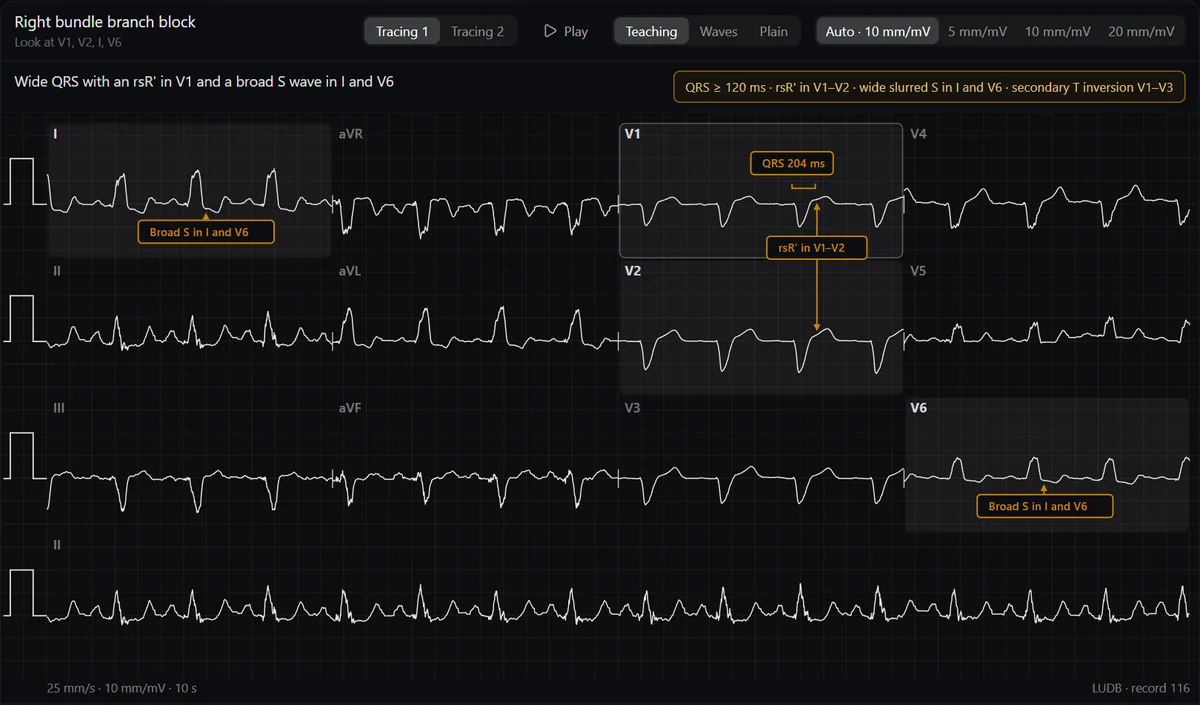
Unlike text chatbots that hallucinate anatomical diagrams, the DecodeMed AI tutor (web and RadioAnato AI mobile app) answers directly on real verified atlases: over 2,200 3D structures, labelled CT and MRI scans, whole-slide histology, real 12-lead ECGs and clinical exam findings—with quizzes to test what you just saw. Web atlases are free to explore; the AI tutor is included in Pro.
02AMBOSS GPT & Knowledge Library
Best for: AI Q&A grounded in peer-reviewed USMLE library articles
Lets AMBOSS subscribers search clinical concepts and USMLE explanations directly inside a medically reviewed reference library rather than open-web guesses.
03NotebookLM
Best for: turning your NBME error log, First Aid notes and lecture PDFs into active recall
Upload your own missed-question journal or block PDFs and ask NotebookLM to spot recurring error patterns, generate targeted quizzes or create audio recaps for commutes—strictly citing your uploaded material.
04ChatGPT, Claude & Gemini
Best for: Socratic clinical reasoning drills, mnemonics and rapid differential comparisons
Ideal when prompted as an NBME examiner: ask them to break down why you chose a distractor, compare two easily confused diseases in a table or write original Step 1/Step 2 vignettes. Always double-check drug doses and guidelines against a primary reference.
05OpenEvidence
Best for: guideline-cited answers for Step 2 CK clinical management
An evidence-based medical AI search engine that cites peer-reviewed trials and clinical guidelines—helpful for clarifying current Step 2 CK management algorithms (requires clinician/student verification where eligible).
06Anki
Best for: locking AI-clarified weak spots into permanent spaced repetition
Not an AI tool on its own, but essential at the end of every AI study session: turn only the specific mechanism or visual sign you missed into a concise cloze or image-occlusion card.
Comparison of USMLE AI tools
| Tool | Best USMLE job | Source grounded? | Free tier |
|---|---|---|---|
| DecodeMed AI (RadioAnato AI) | Visual AI tutor on 3D, CT/MRI, histology, ECG & exam | Yes (real medical atlases) | Free web atlases & app download; Pro AI |
| AMBOSS GPT & Knowledge Library | USMLE article search & Qbank assistance | Yes (AMBOSS library) | Trial only (paid) |
| NotebookLM | Quizzing from your error log & PDFs | Yes (your uploads) | Free tier |
| ChatGPT, Claude & Gemini | Socratic drills, comparisons & mnemonics | General LLM (verify facts) | Free tiers & paid plans |
| OpenEvidence | Cited clinical guidelines (Step 2 CK) | Yes (medical literature) | Free for verified accounts |
Study it in RadioAnato AI
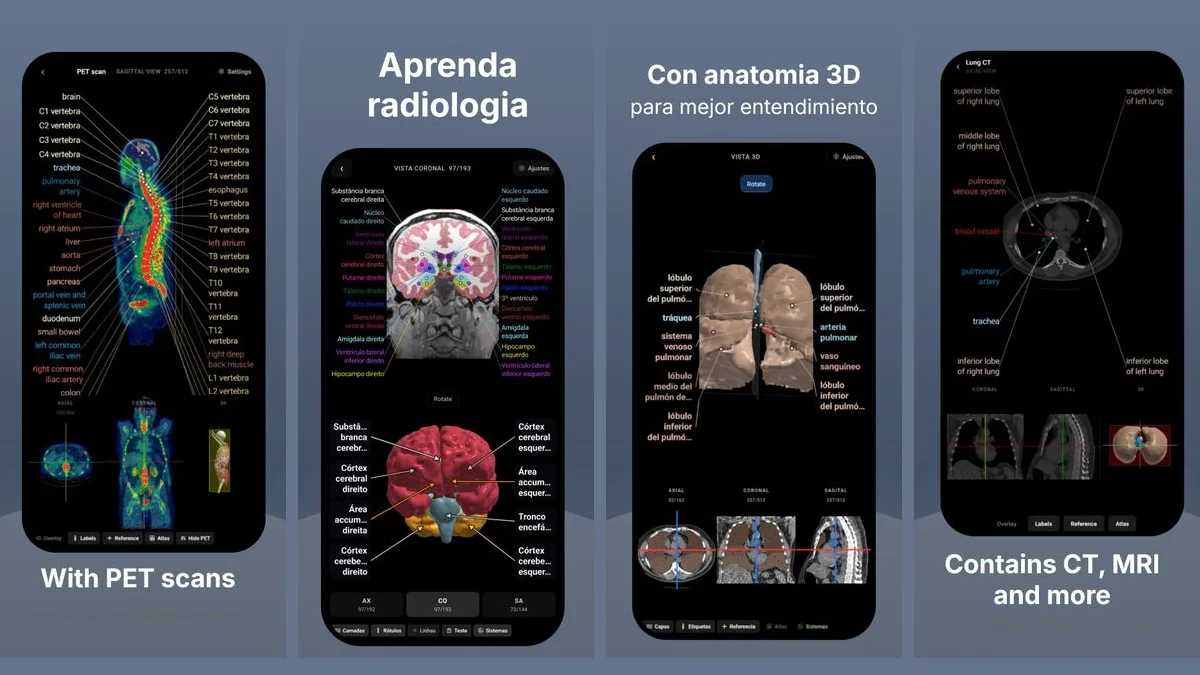
RadioAnato AI, the DecodeMed app, puts 3D anatomy, CT and MRI studies, histology slides and an AI tutor that answers on them in your pocket. Free to download for iPhone, iPad and Android.
Copy-paste AI prompts for USMLE Step 1 and Step 2 CK
1. Visual USMLE correlation (ask inside DecodeMed AI)
Show me the coronary arterial territories and ventricular wall anatomy in 3D and on CT, then connect each vessel to its classic 12-lead ECG ST-elevation leads and mechanical MI complications. Quiz me on three short cases.
2. NBME missed-question root-cause analysis
I missed a USMLE question where I chose [my distractor] instead of [correct answer]. Do NOT summarise the textbook. Instead: (1) identify the single pivot clue in the vignette I overlooked, (2) show a 4-row table comparing the two conditions by age, presentation, lab/imaging hallmark and first-line mechanism/management, and (3) ask me one fresh two-step follow-up vignette.
3. Socratic Step 2 CK next-best-step drill
Act as a USMLE Step 2 CK examiner. Give me one realistic clinical vignette at a time in [cardiology / OB-GYN / internal medicine] with vitals and initial labs. Wait for my answer on both the most likely diagnosis AND the single best next step in management before grading me and explaining why each wrong option is premature or harmful.
4. Pharmacology mechanism & adverse-effect comparison
Quiz me Socratically on [beta-blockers vs nondihydropyridine calcium channel blockers / loop vs thiazide diuretics]. Ask one two-step mechanism question at a time linking receptor/transporter site, electrolyte or hemodynamic shift and classic USMLE toxicity.
Explore more: best USMLE Qbank in 2026, best free USMLE Qbank, best USMLE education platforms and USMLE high-yield visuals guide.
Frequently asked questions
What is the best AI tool for USMLE prep in 2026?
DecodeMed AI (RadioAnato AI) is the best AI tool for the visual side of USMLE prep (3D anatomy, CT/MRI, histology, 12-lead ECGs and clinical exam), paired with AMBOSS or NotebookLM for source-grounded text review and ChatGPT/Claude for Socratic differential-diagnosis drills.
Can ChatGPT replace UWorld or NBME practice exams?
No. ChatGPT is a strong tutor for explaining concepts and analysing your error log, but it cannot reproduce calibrated NBME psychometric difficulty, official Prometric formatting or verified medical imaging.
How do I stop AI hallucinations while studying for the USMLE?
Use atlas-grounded tools like DecodeMed AI for visual anatomy, imaging, histology and ECG; restrict NotebookLM to your own verified notes; and always verify drug mechanisms, cutoffs and Step 2 CK guidelines against UWorld, AMBOSS or NBME explanations.
Is using AI to study for the USMLE allowed?
Yes, using AI as a personal study tutor, flashcard drafter and active-recall coach during preparation is standard practice. Never attempt to use external tools during actual exams or share copyrighted NBME/UWorld text.
DecodeMed and its app, RadioAnato AI, are our own product, so weigh what we say about them accordingly. We have no affiliate or commercial relationship with the other tools listed.
Get RadioAnato AI, the DecodeMed app
Anatomy, radiology and histology in one app, on the App Store and Google Play.
About RadioAnato AI