The Best ECG Books for Medical Students (2026)
By the DecodeMed Team7 min read
Get the RadioAnato AI app, free:App StoreGoogle PlayAbout RadioAnato AI
Start with Dubin’s Rapid Interpretation of EKG’s or Hampton’s The ECG Made Easy, then practise with Hampton’s ECG cases; Thaler and Goldberger take you to clinical level, and Bayés de Luna is the reference for when you want the full depth. Whatever book you choose, read it next to real tracings.
How to choose an ECG book
- Beginner: a short book that builds each wave from the physiology, with many drawn examples.
- Practice: a book of cases with answers, read after the basics.
- Reference: a long textbook for the mechanisms and rare patterns.
The best ECG books
01Rapid Interpretation of EKG’s (Dubin)
Best for: the very first ECG book
A programmed, frame-by-frame course that builds the ECG from the electrophysiology, with drawings and mnemonics. Many students read it in a weekend and finally understand the axis.
02The ECG Made Easy (Hampton)
Best for: a short, clear introduction
A compact book that covers the normal ECG, rhythms, conduction problems and ischaemia with clinical common sense. Part of a series with The ECG in Practice.
03150 ECG Cases (Hampton)
Best for: practice with answers
Each case gives a short history and a full ECG, then explains the interpretation and what to do. The newest edition has 160 cases, including smartwatch tracings.
04The Only EKG Book You’ll Ever Need (Thaler)
Best for: moving from basics to clinical reading
Readable and clinical, with clear chapters on hypertrophy, arrhythmias, conduction blocks and infarction. A good second book.
05Goldberger’s Clinical Electrocardiography
Best for: the medical-school textbook
A simplified but thorough approach that ties each pattern to the clinical situation, with review questions.
06Clinical Electrocardiography (Bayés de Luna)
Best for: the full depth
A reference by one of the leading electrocardiographers, with the mechanisms behind every pattern. For when you want to understand, not just recognise.
07DecodeMed ECG Atlas
Best for: seeing on real tracings what the book describes
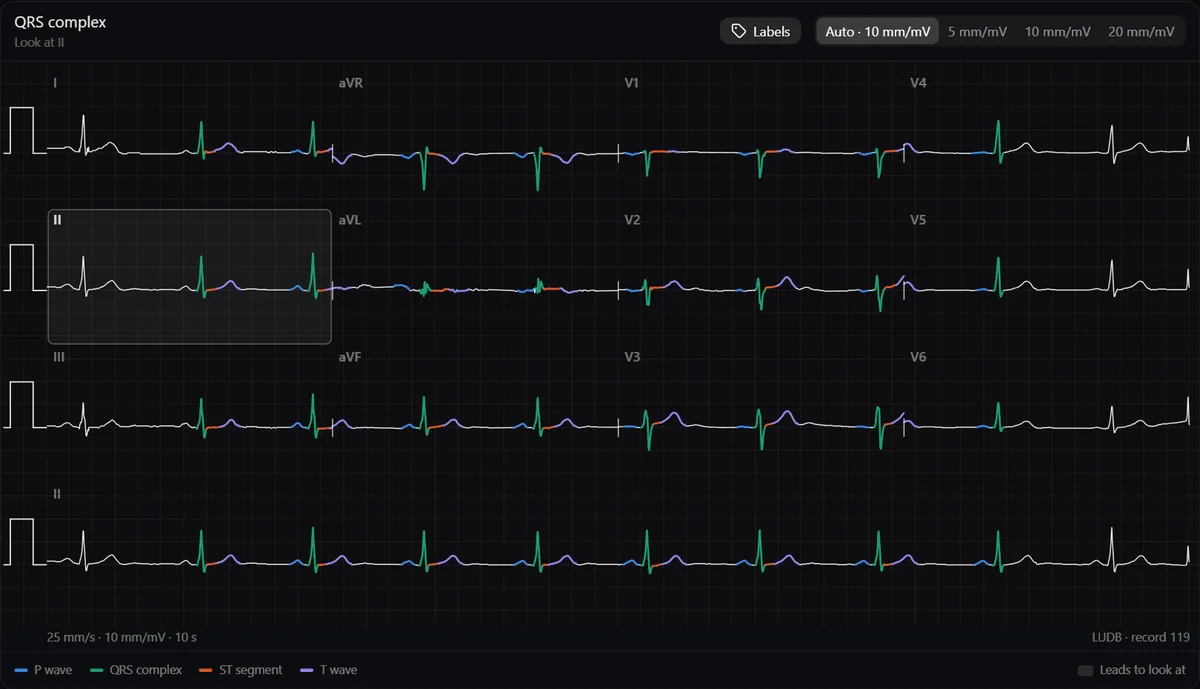
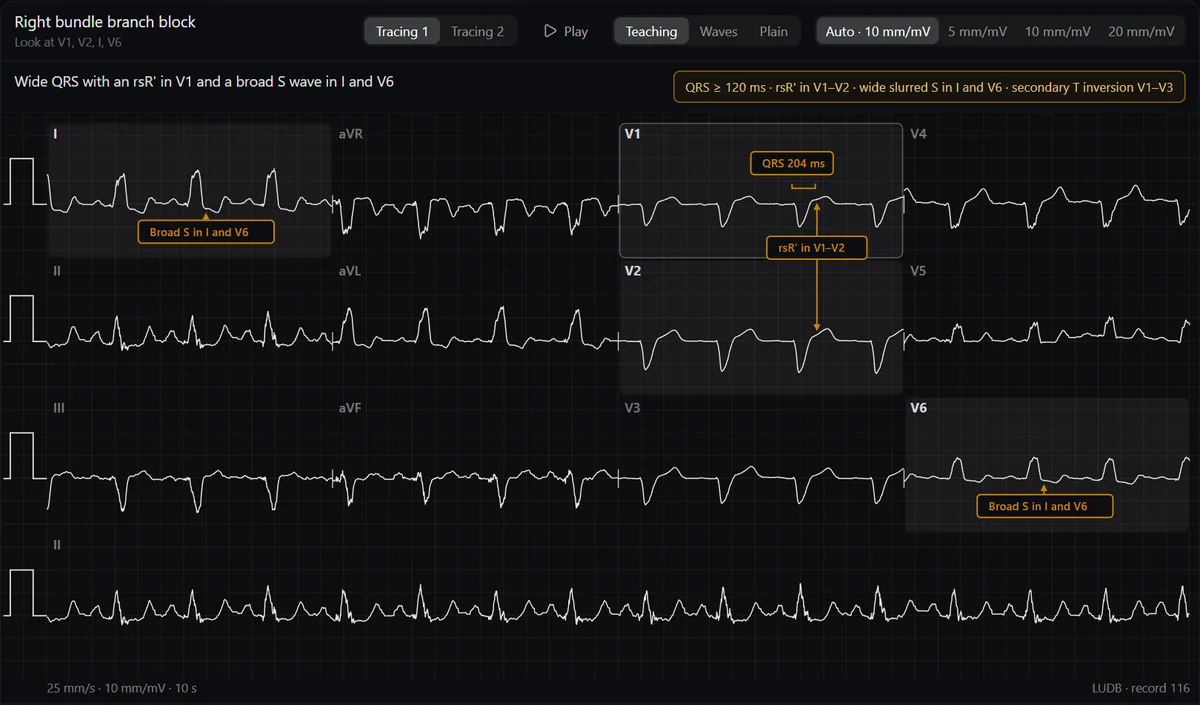
Not a book: real 12-lead ECGs organised like a course, with arrows on what changes, each wave coloured and the intervals measured. Read the chapter, then find the pattern in the atlas.
Which book for each stage
| Stage | Book | Then |
|---|---|---|
| First contact | Dubin or Hampton’s The ECG Made Easy | Read 10 normal ECGs |
| Practice | 150/160 ECG Cases | One case a day |
| Clinical years | Thaler or Goldberger | Ward ECGs, compared with the report |
| Depth | Bayés de Luna | Look up the mechanisms of what you see |
Study it in RadioAnato AI
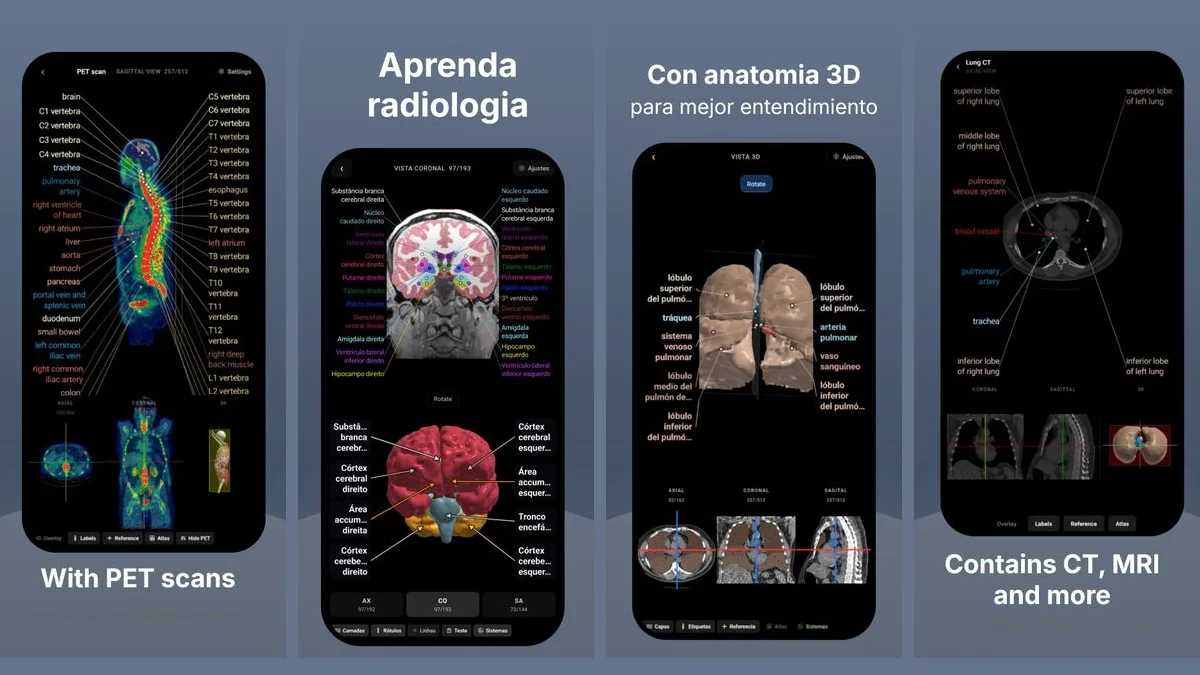
RadioAnato AI, the DecodeMed app, puts 3D anatomy, CT and MRI studies, histology slides and an AI tutor that answers on them in your pocket. Free to download for iPhone, iPad and Android.
Read with tracings beside you
A book shows ideal drawings. After each chapter, look for the same pattern on real ECGs: in the ECG atlas, in a case book or on the ward. The step-by-step method is in how to learn ECG from scratch.
Frequently asked questions
What is the best ECG book for beginners?
Dubin’s Rapid Interpretation of EKG’s or Hampton’s The ECG Made Easy. Both are short and build the ECG from the physiology.
Dubin or Hampton?
Dubin is better if you want to understand where each wave and the axis come from; Hampton is shorter and more clinical. Many students read Dubin first and then practise with Hampton’s cases.
What ECG book should I use for practice?
Hampton’s 150 or 160 ECG Cases, with a history, a full ECG and an explained answer for each case.
DecodeMed and its app, RadioAnato AI, are our own product, so weigh what we say about them accordingly. We have no affiliate or commercial relationship with the other tools listed.
Get RadioAnato AI, the DecodeMed app
Anatomy, radiology and histology in one app, on the App Store and Google Play.
About RadioAnato AI