The Best Apps to Learn ECG Interpretation (2026)
By the DecodeMed Team7 min read
Get the RadioAnato AI app, free:App StoreGoogle PlayAbout RadioAnato AI
The best way to learn ECG is on many real tracings, with someone pointing at what changed. The DecodeMed ECG Atlas does exactly that on real 12-lead recordings, ECG Academy and EKG SecondLook are the best for drilling cases, and LITFL is the reference library to look things up.
What a good ECG app needs
- Real tracings, not drawings. Textbook diagrams are clean; real ECGs have noise, baseline wander and borderline values.
- Someone pointing. A beginner does not know where to look. The app should show which lead and which wave changes.
- Measurements you can check: rate, PR, QRS, QT and axis on the tracing itself.
- A way to hide the answers, so you can practise reading before you look.
The best apps and websites to learn ECG
01DecodeMed ECG Atlas
Best for: learning each pattern on real 12-lead ECGs
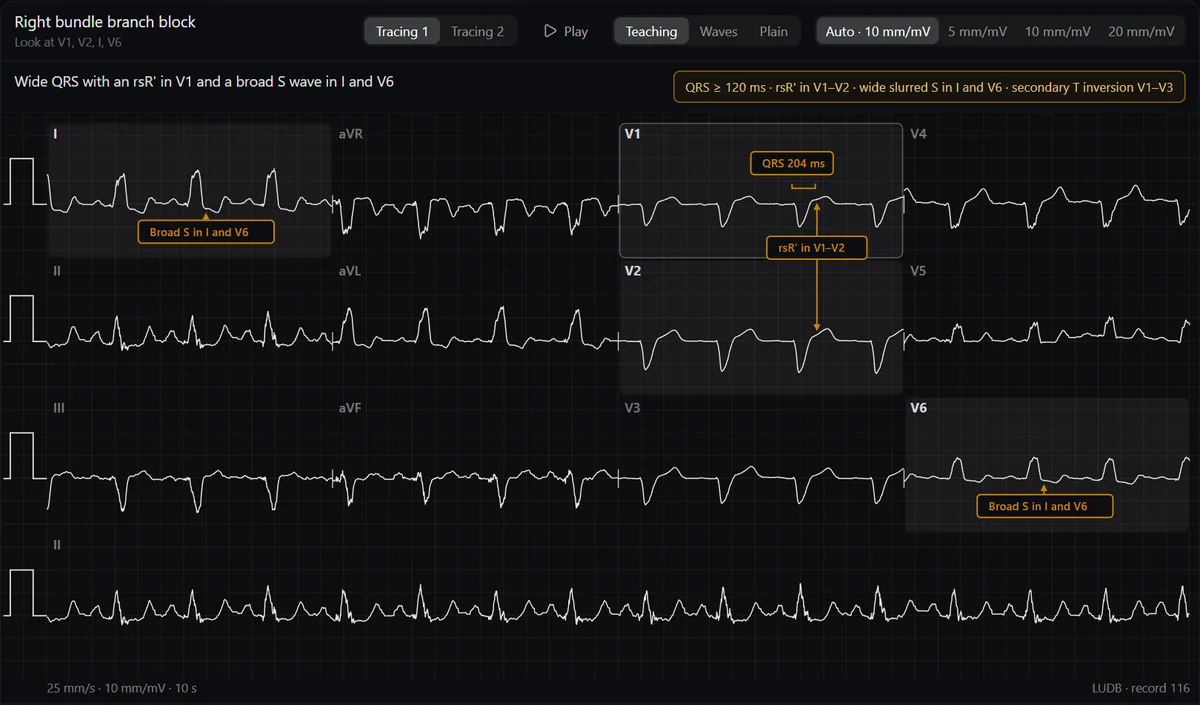
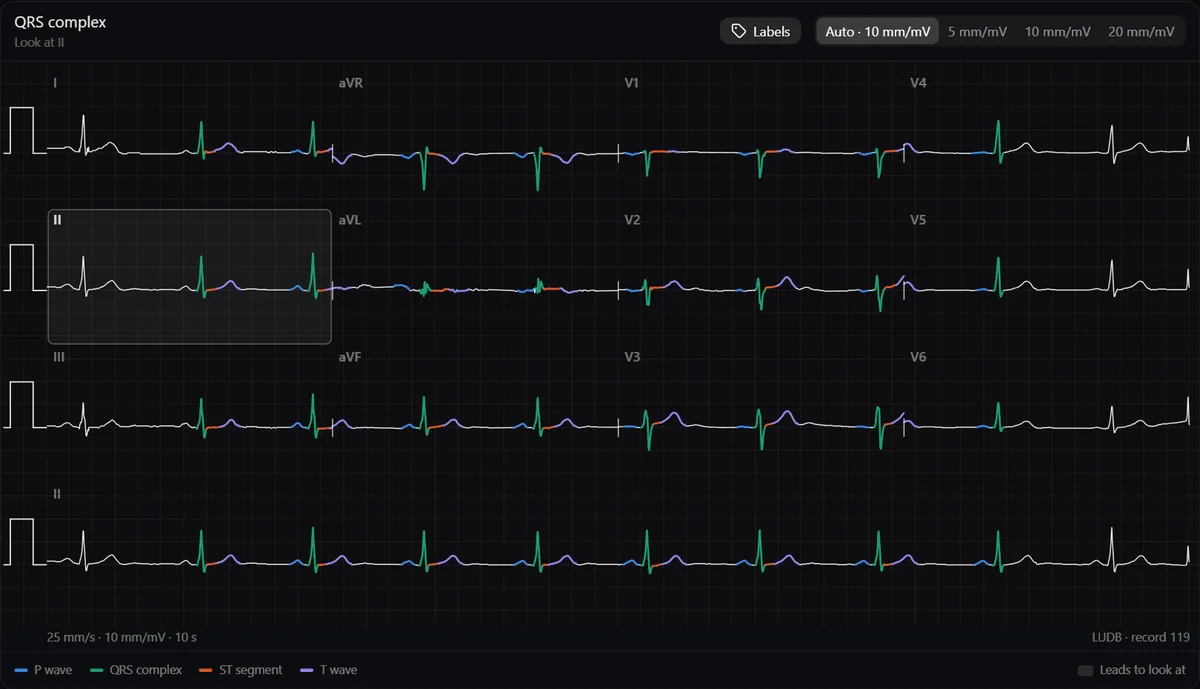
Real 12-lead tracings from open research databases, organised as a course: from the P wave and the intervals to arrhythmias, bundle branch blocks and myocardial infarction patterns. The Teaching view puts arrows and boxes on what changes and lists the criteria; Waves colours every P, QRS, ST and T; Plain hides everything so you can test yourself. Each tracing shows its rate, PR, QRS, QT, QTc and axis, and Play draws it at 25 mm/s like a monitor.
02ECG Academy
Best for: drilling hundreds of cases
An iPhone app with a library of real ECG cases, annotations and a quiz mode for arrhythmia recognition and differential diagnosis.
03EKG SecondLook
Best for: self-testing on the basics
From the University of Michigan: self-assessment on normal ECG interpretation and the common heart diseases as they appear on the ECG. Free on the web and in the app stores.
04LITFL ECG Library
Best for: looking up any pattern
Life in the Fast Lane’s free library covers almost every ECG finding with examples and references. Ideal to look something up; less structured for a beginner.
05InVivo ECG
Best for: a chapter-by-chapter course on iPad
Tutorials grouped in chapters, each followed by practice questions. Free to download with in-app purchases.
06EKG.Academy
Best for: free rhythm drills
Free lessons and rhythm-strip drills, useful for monitor rhythms and basic arrhythmias.
07RadioAnato AI
Best for: the heart behind the tracing
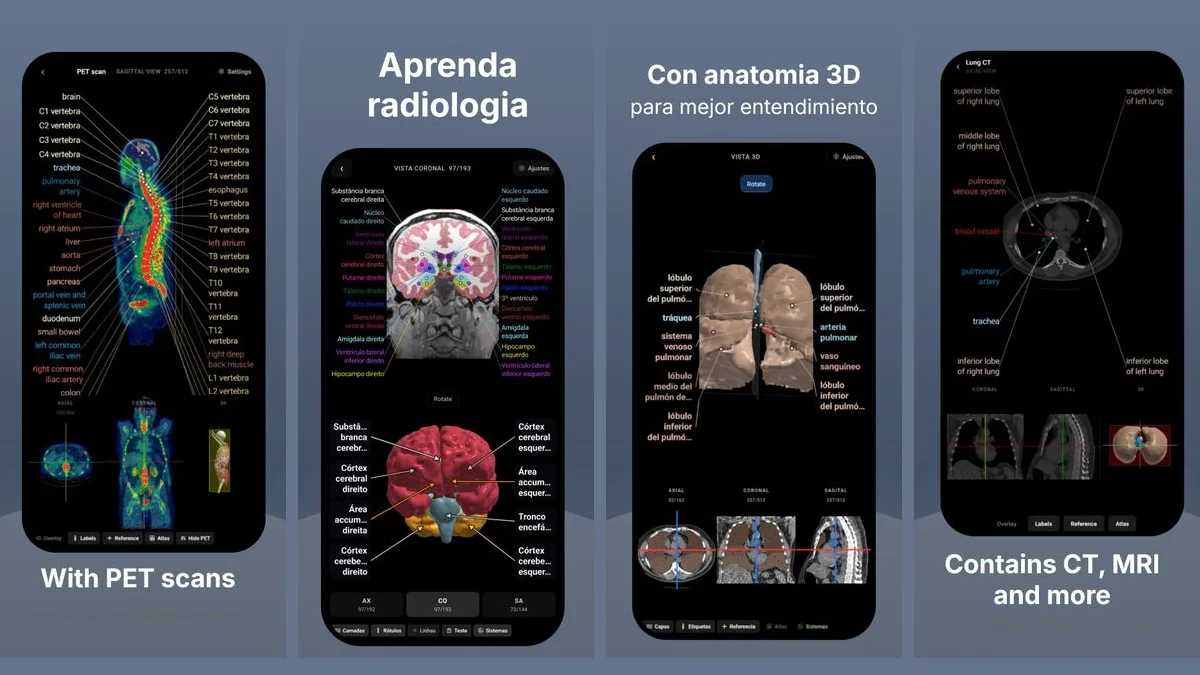
The DecodeMed app: the heart in 3D and on real CT, the cardiac muscle under the microscope and an AI tutor that answers on those images. Pair it with the ECG atlas to see which wall a lead is looking at.
Comparison at a glance
| Tool | Real tracings | Shows what changes | Where |
|---|---|---|---|
| DecodeMed ECG Atlas | Yes, 12 leads | Yes, arrows and criteria on the tracing | Web |
| ECG Academy | Yes | Annotations per case | iPhone |
| EKG SecondLook | Yes | Explanations after each question | Web, iPhone, Android |
| LITFL ECG Library | Yes | Text and examples | Web |
| InVivo ECG | Partly | Tutorials | iPad |
| EKG.Academy | Rhythm strips | Short lessons | Web |
Study it in RadioAnato AI
RadioAnato AI, the DecodeMed app, puts 3D anatomy, CT and MRI studies, histology slides and an AI tutor that answers on them in your pocket. Free to download for iPhone, iPad and Android.
How to use them
- Learn one pattern in the Teaching view, then switch to Plain on a second tracing and find it yourself.
- Read every ECG in the same order: rate, rhythm, axis, intervals, P, QRS, ST, T. See how to learn ECG from scratch.
- Drill cases daily with a quiz app; ten ECGs a day beat one long session a week.
- Look up what you miss in LITFL or your textbook.
For hands-on rhythm practice see the best ECG simulators, and for books see the best ECG books.
Frequently asked questions
What is the best app to learn ECG?
For learning each pattern on real 12-lead tracings, the DecodeMed ECG Atlas, because it marks what changes on the tracing and lets you hide it to practise. For drilling cases, ECG Academy and EKG SecondLook.
Are there free ECG apps?
Yes. EKG SecondLook, the LITFL ECG Library and EKG.Academy are free, and ECG Academy and InVivo ECG are free to download.
Can I learn ECG with an app alone?
An app gives you the volume of tracings you need, but pair it with a book or a course for the physiology behind each wave, and check doubtful tracings with a teacher.
DecodeMed and its app, RadioAnato AI, are our own product, so weigh what we say about them accordingly. We have no affiliate or commercial relationship with the other tools listed.
Get RadioAnato AI, the DecodeMed app
Anatomy, radiology and histology in one app, on the App Store and Google Play.
About RadioAnato AI