NBME Practice Exams and USMLE Free 120: Order, Passing Scores & Review Strategy (2026)
By the DecodeMed Team8 min read
Get the RadioAnato AI app, free:App StoreGoogle PlayAbout RadioAnato AI
Official NBME practice exams and the free USMLE Free 120 are the most accurate predictors of your real Step 1 and Step 2 CK performance because they are written by the exact same organisation that writes the exam. Take 4 to 6 NBME forms spaced every 10–14 days, save the newest forms and the official Free 120 for the final two weeks, aim for at least two consecutive Step 1 scores above 65–70% Equated Percent Correct, and verify every missed image, scan or ECG immediately in DecodeMed AI.
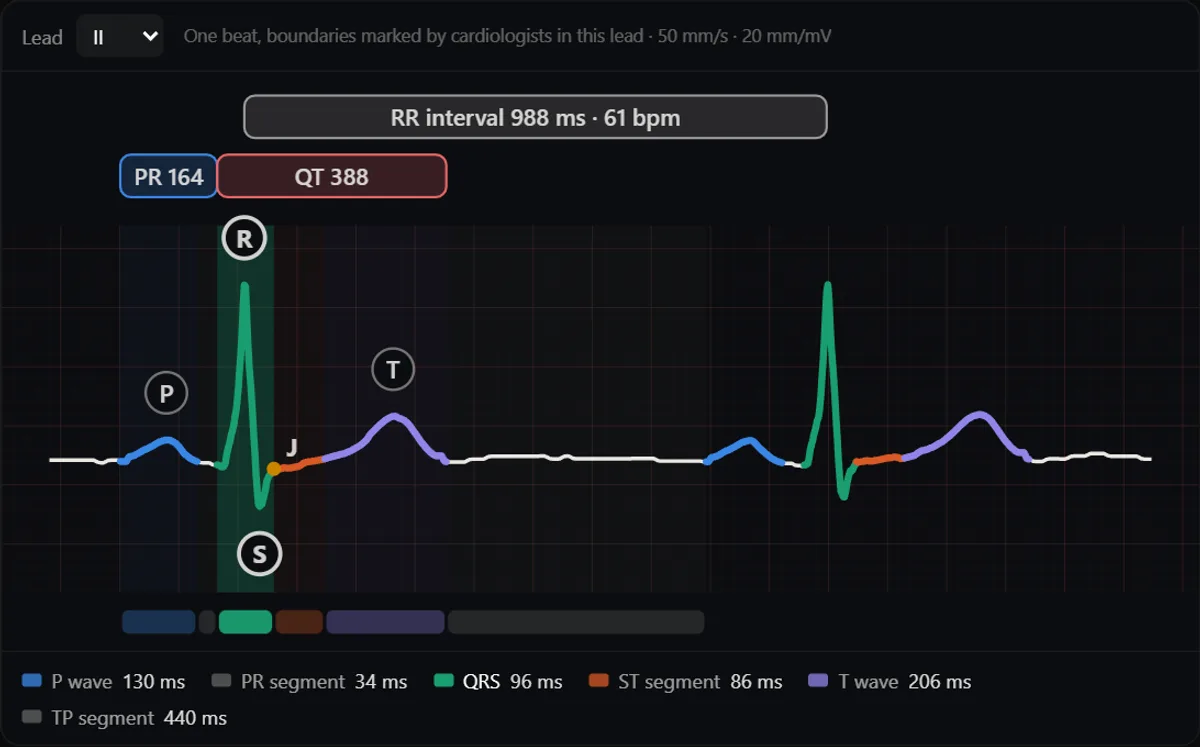
Exact order to take NBME practice exams and Free 120
| Timing before exam | Step 1 recommended form | Step 2 CK recommended form | Purpose |
|---|---|---|---|
| 6–8 weeks out | NBME CBSSA Form 26 (or 25) | NBME CCSSA Form 9 or 10 | Baseline diagnostic & weak-system map |
| 4–5 weeks out | NBME CBSSA Form 27 & Form 28 | NBME CCSSA Form 11 + CMS forms | Track growth & adapt to terse NBME wording |
| 2–3 weeks out | NBME CBSSA Form 29 & Form 30 | NBME CCSSA Form 12 & Form 13 | Confirm stable pass / target score zone |
| 10–14 days out | NBME CBSSA Form 31 (newest) | NBME CCSSA Form 14 (newest) | Highest-fidelity predictive check |
| 5–7 days out | Official USMLE Step 1 Free 120 | Official USMLE Step 2 CK Free 120 | Prometric UI, media/audio & final confidence |
What NBME scores mean you are ready to sit the exam
- USMLE Step 1 (Pass/Fail): NBME score reports display your Equated Percent Correct (EPC) and your estimated probability of passing within one week. One score around 62–64% is still borderline; two or more consecutive NBME scores of 65–70%+ (95–99% chance of passing) plus a Free 120 above 68–70% represent a comfortable green light.
- USMLE Step 2 CK (3-digit score): look at the average of your final 2–3 NBME CCSSA forms (especially Forms 12–14) and your Free 120 percentage rather than any single outlier. Taking UWSA 2 alongside NBME 13 and 14 gives a tight confidence band.
- When to postpone: if you are still under 60% EPC on Step 1 within two weeks of test day—or 15+ points below your Step 2 CK target—rescheduling is far smarter than risking a permanent score or failure on your transcript.
How to review an NBME practice exam in one day
Every official NBME question tests a core concept that reappears in disguised form on real test day. Do not merely glance at your percentage—classify every single wrong and guessed question into four buckets:
- 1. Pure knowledge gap: you did not recognise the enzyme, bug, drug or guideline. Make one tight Anki card and move on.
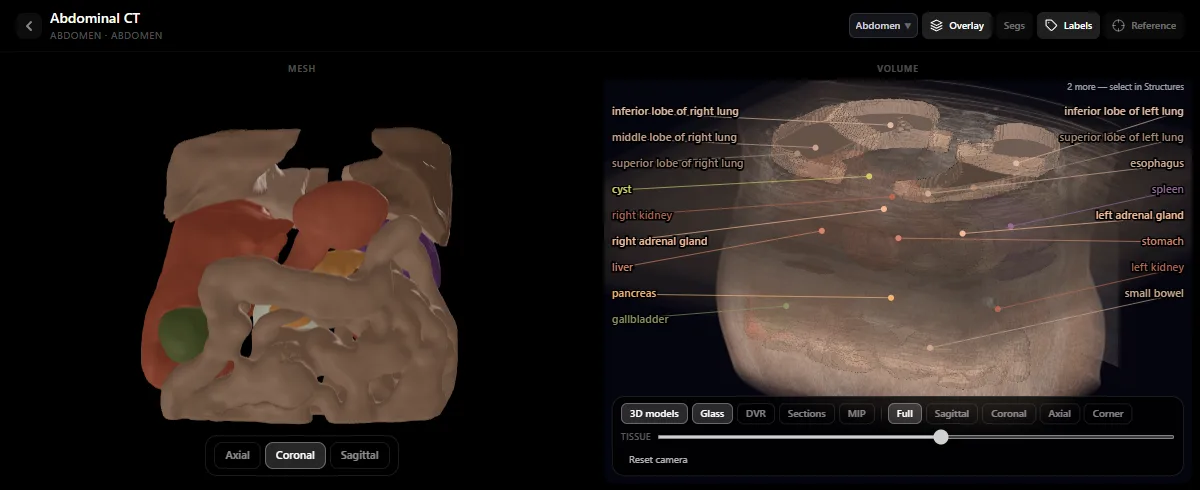
- 2. Visual recognition error: you misread a brain MRI, chest/abdominal CT, histology micrograph, 12-lead ECG, optic disc or heart murmur. Open that exact structure or pattern in DecodeMed’s free atlases (radiology, histology, ECG, 3D anatomy or clinical exam) and drill it interactively until you can identify it blind.
- 3. Vignette misread / rushed timing: you missed a key age, timeline or vital sign. Slow down your first read of the last sentence (the lead-in) and highlight abnormal vitals.
- 4. Overthinking / changing from right to wrong: NBME questions are rarely trick riddles—when in doubt, pick the simplest pathophysiological link supported by the stem.
Study it in RadioAnato AI
RadioAnato AI, the DecodeMed app, puts 3D anatomy, CT and MRI studies, histology slides and an AI tutor that answers on them in your pocket. Free to download for iPhone, iPad and Android.
How to simulate real test-day stamina
An NBME CBSSA/CCSSA has 200 questions (four 50-question blocks), whereas Step 1 has 280 questions (7 blocks) and Step 2 CK has up to 318 questions (8 blocks). Two weeks before your exam, combine one full NBME form (200 questions) with two timed UWorld/AMBOSS blocks or the Free 120 back-to-back, starting at 8:00 a.m. with planned breaks and snacks, so your brain knows what Block 7 feels like before test day.
Pair this guide with the best USMLE Qbank in 2026, the best free USMLE Qbank, USMLE Step 1 study schedule and best USMLE Step 2 CK resources.
Frequently asked questions
Is the USMLE Free 120 really free?
Yes. The official USMLE Free 120 for Step 1, Step 2 CK and Step 3 is published completely free on the USMLE website and runs in the exact Prometric testing interface.
How predictive is the USMLE Free 120?
Very predictive—especially for question wording, stem length and media format. Scoring above 68–70% on the Step 1 Free 120 alongside passing NBME CBSSA forms strongly predicts a comfortable Step 1 pass.
Should I take NBME forms online or offline?
Taking official forms online through NBME gives you calibrated timing, realistic score reports with Equated Percent Correct, system-by-system performance bars and built-in answer explanations.
How many NBME practice exams should I take before Step 1?
Four to six official NBME forms (typically Forms 26 through 31) plus the official Free 120 provide both thorough exposure to NBME concepts and reliable readiness confirmation.
Get RadioAnato AI, the DecodeMed app
Anatomy, radiology and histology in one app, on the App Store and Google Play.
About RadioAnato AI