The Best Apps for Medical Students in 2026, by Year and Subject
By the DecodeMed Team8 min read
Get the RadioAnato AI app, free:App StoreGoogle PlayAbout RadioAnato AI
There is no single best app for medical school; most students use four or five. The core set in 2026 is Anki for memorising, a question bank (AMBOSS or UWorld) for exams, RadioAnato AI to see anatomy, scans, slides and ECGs with an AI tutor, a video course such as Osmosis for concepts, and MDCalc once you are on the wards.
The apps, by job
01RadioAnato AI
Best for: seeing anatomy, scans, slides and ECGs
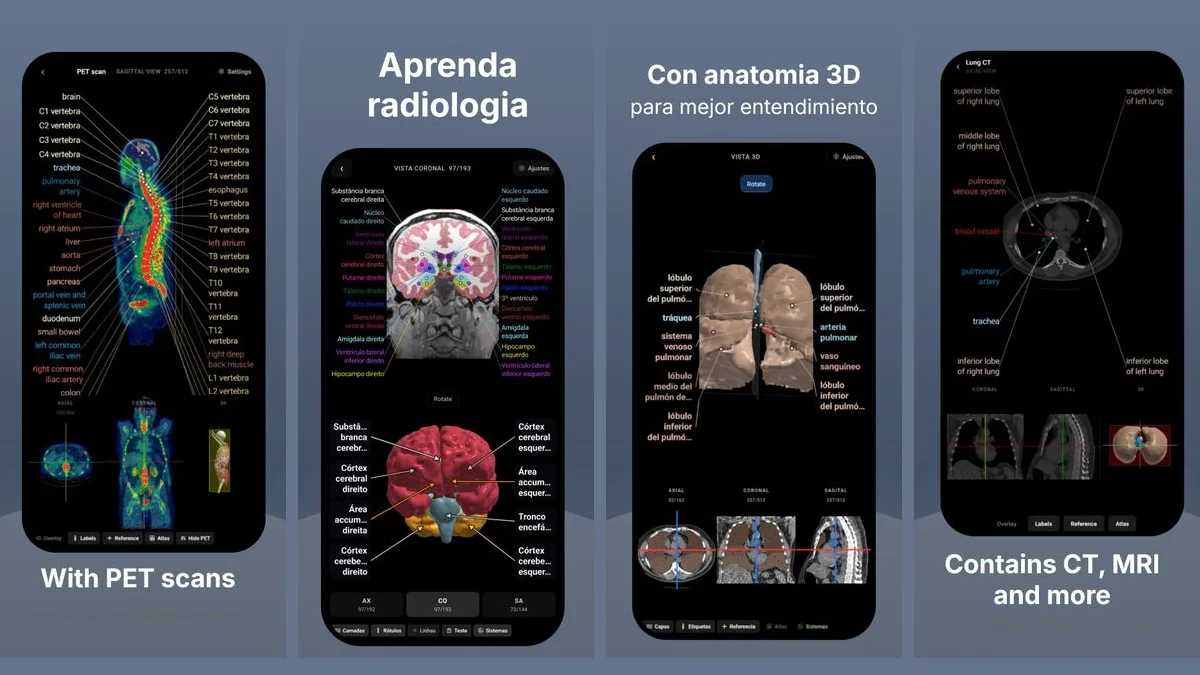
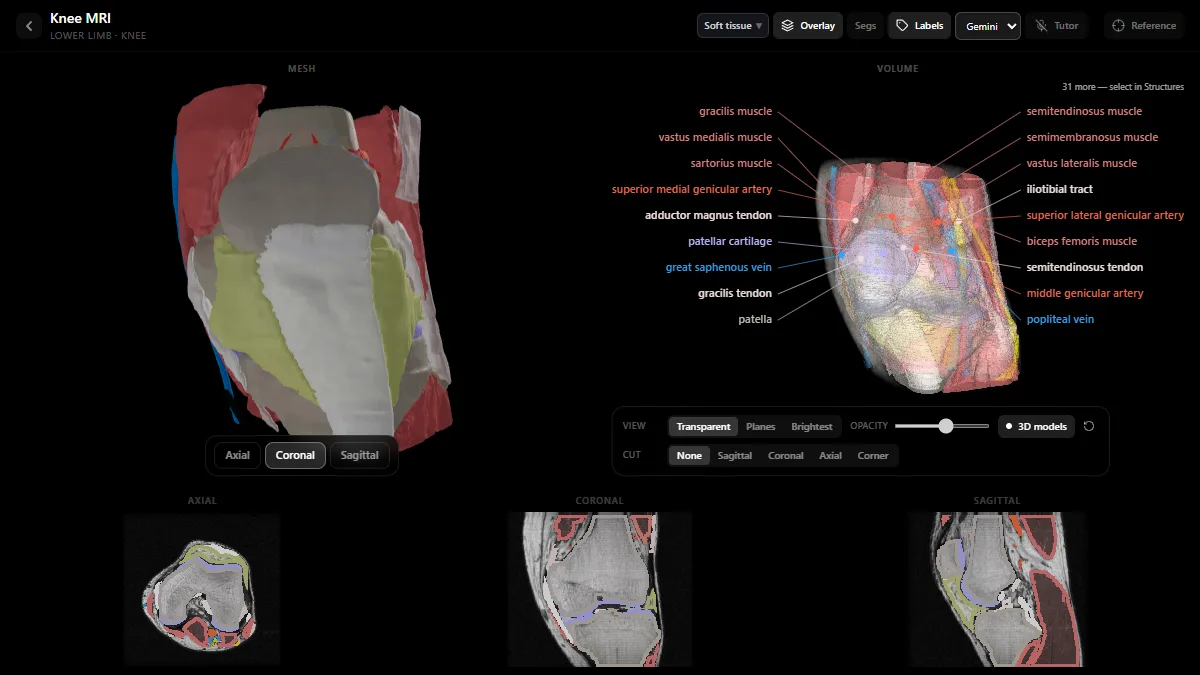
The DecodeMed app. The 3D body with atlas lessons, real CT and MRI with every structure labelled, a histology atlas, an ECG atlas, a clinical examination atlas and an AI tutor that answers on those images rather than with text alone. It covers the visual half of the first three years in one place. Free to try; full access with Pro. iPhone, Android and web.
02Anki
Best for: memorising with spaced repetition
Flashcards (free on Android, computer and the web; paid on iPhone) that schedule each card just before you would forget it. Most students use shared decks for their exam and add their own cards for what they get wrong.
03AMBOSS
Best for: a question bank plus a knowledge library
Exam-style questions with explanations linked to a library of articles. Popular for the USMLE and in Germany; also used on the wards for quick look-ups.
04UWorld
Best for: USMLE-style questions
The reference question bank for USMLE Step 1 and Step 2 CK, with detailed explanations and illustrations.
05Osmosis
Best for: short videos for concepts
Animated videos on physiology, pathology and pharmacology, with questions and flashcards. Good for a first pass on a topic.
06Lecturio
Best for: full video lectures
Longer lecture-style videos by subject, with questions, aimed at both pre-clinical and clinical years.
07MDCalc
Best for: clinical scores on the wards
Free clinical calculators and scores (Wells, CHA₂DS₂-VASc, CURB-65 and hundreds more), with the evidence behind each.
08OpenEvidence
Best for: evidence-based answers
An AI search engine over the medical literature that cites its sources. Free for verified health professionals.
Which apps for which year
| Stage | What you need | Apps |
|---|---|---|
| Years 1–2 (basic sciences) | Anatomy, histology, physiology, recall | RadioAnato AI, Anki, Osmosis |
| Year 3 (pathology, pharmacology) | Concepts and exam questions | Osmosis or Lecturio, AMBOSS, Anki |
| Clinical years | Exam skills, imaging, ECG, scores | RadioAnato AI (exam, ECG and radiology atlases), MDCalc, AMBOSS |
| Licensing exams | Thousands of questions | UWorld or AMBOSS, Anki |
Study it in RadioAnato AI
RadioAnato AI, the DecodeMed app, puts 3D anatomy, CT and MRI studies, histology slides and an AI tutor that answers on them in your pocket. Free to download for iPhone, iPad and Android.
How to keep it to a few apps
- One app per job. One flashcard app, one question bank, one visual atlas. Switching between similar apps costs more time than it saves.
- Learn visually, then test. See the structure, slide or tracing first, then turn it into cards and questions.
- Use AI to explain, not to replace practice. Ask the tutor why, then answer questions yourself.
For subject-by-subject lists see the best apps to learn anatomy, histology, physiology, ECG and the best AI tools for medical students.
Frequently asked questions
What is the best app for medical students?
Most students combine several: Anki for memorising, AMBOSS or UWorld for questions, and RadioAnato AI to learn anatomy, imaging, histology and ECG visually with an AI tutor.
What apps do first-year medical students need?
A visual anatomy and histology atlas such as RadioAnato AI, Anki for spaced repetition and a video course such as Osmosis for physiology.
Are there free apps for medical students?
Anki (on Android and the web), MDCalc and Radiopaedia are free; RadioAnato AI, Osmosis and AMBOSS can be tried free.
DecodeMed and its app, RadioAnato AI, are our own product, so weigh what we say about them accordingly. We have no affiliate or commercial relationship with the other tools listed.
Get RadioAnato AI, the DecodeMed app
Anatomy, radiology and histology in one app, on the App Store and Google Play.
About RadioAnato AI