The Best AI Tools to Learn ECG Interpretation (2026)
By the DecodeMed Team7 min read
Get the RadioAnato AI app, free:App StoreGoogle PlayAbout RadioAnato AI
AI is excellent for explaining why each wave changes, quizzing you and turning your notes into questions, but general chatbots are not reliable at reading ECG images. Use real labelled tracings, such as those in the DecodeMed ECG Atlas, for the pattern recognition, and ChatGPT, NotebookLM and Anki around them for the explanations and the repetition.
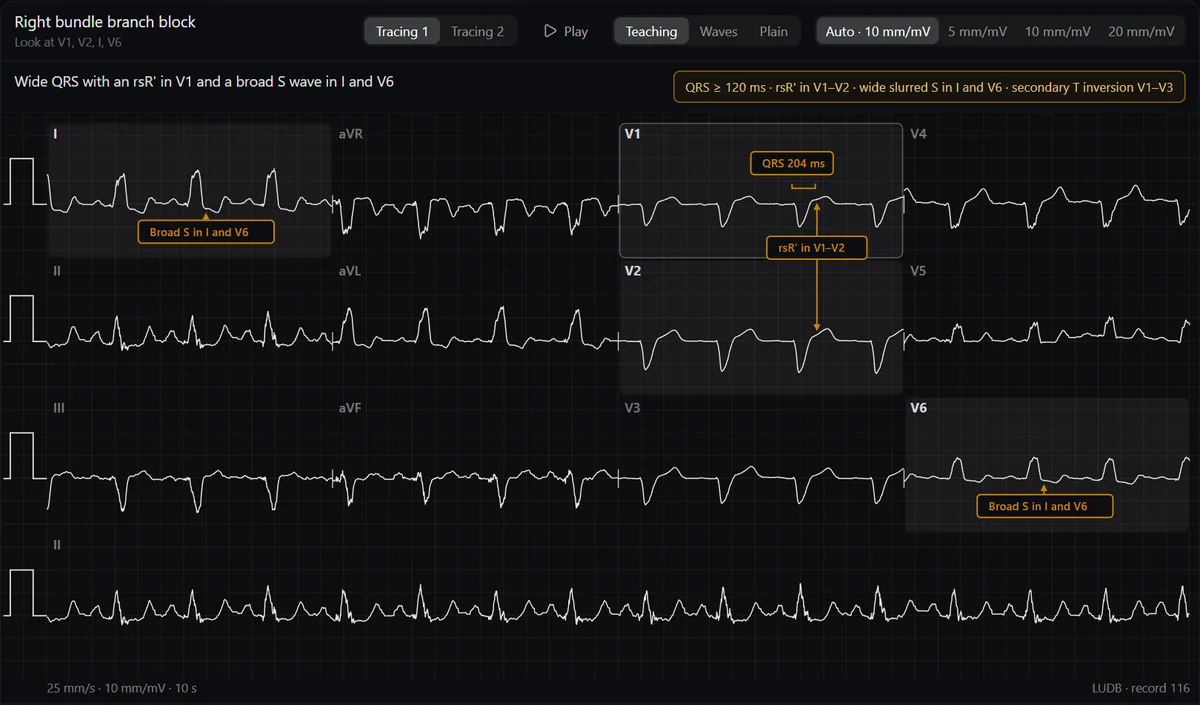
What AI is good and bad at in ECG
- Good: explaining mechanisms (why RBBB adds an R′ in V1), building quizzes, summarising a chapter, making flashcards.
- Bad: reading a photo of an ECG. General chatbots miss or invent findings; they are not certified ECG readers.
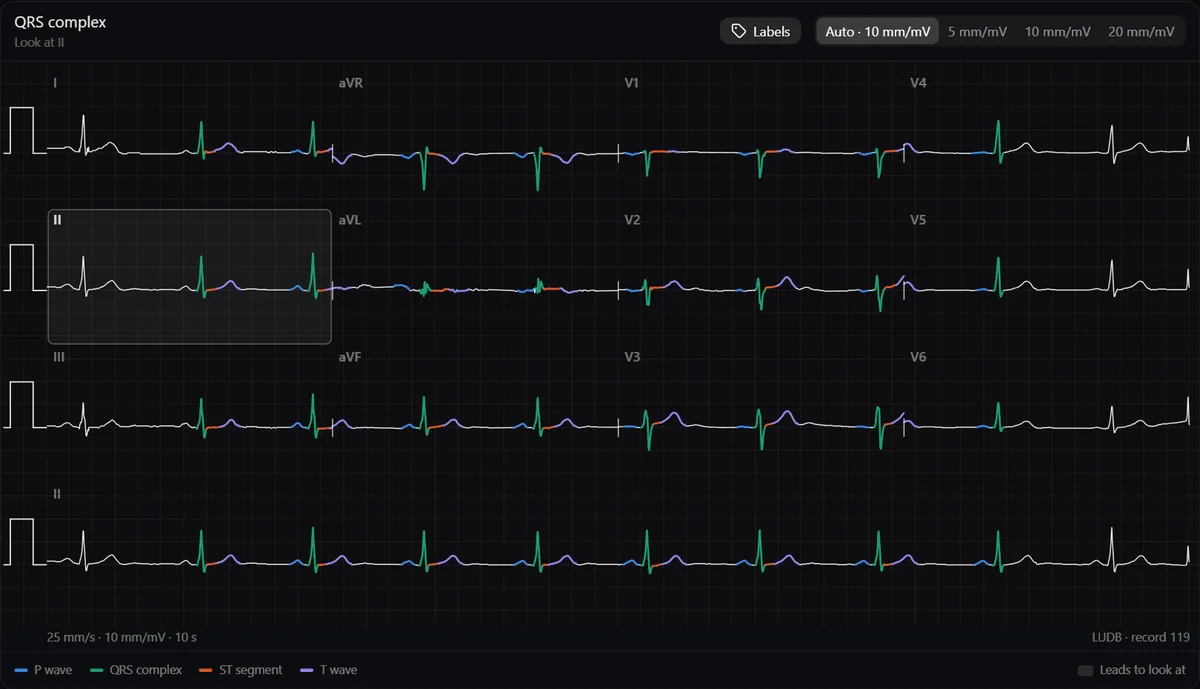
- Rule: learn the patterns on real tracings where an expert marked the answer, and use AI to understand and repeat.
The best AI tools to learn ECG
01DecodeMed ECG Atlas
Best for: real tracings with the answer marked
Real 12-lead ECGs with every wave coloured where cardiologists marked it and teaching notes that point at what changes. The RadioAnato AI app adds an AI tutor that answers on the 3D heart, real CT and histology, to connect each lead with the wall it looks at.
02ChatGPT
Best for: explanations and quizzes on demand
Ask it to explain a mechanism step by step or to quiz you on criteria. Check every number against your book.
03NotebookLM
Best for: questions from your own material
Upload your lecture notes or a chapter and ask for summaries, quizzes or an audio overview based only on those sources.
04Anki
Best for: spaced repetition
Make cards with an ECG image on the front and the criteria on the back; the algorithm decides when to show them again.
05OpenEvidence
Best for: evidence-based clinical questions
For questions such as which criteria a guideline uses, with references to the sources.
Prompts to copy
Explain a pattern
Explain, as to a second-year medical student, why a right bundle branch block produces an rsR′ in V1 and a broad S wave in I and V6. Go from the conduction to each wave, in five steps.
Quiz me
Ask me 10 multiple-choice questions on ECG intervals and their normal values, one at a time. Wait for my answer, then explain why it is right or wrong.
Compare two patterns
Make a table comparing left and right bundle branch block: QRS width, V1, V6, lead I, axis and secondary ST-T changes.
Make flashcards
Turn these notes into Anki cards with the question on the front and a short answer on the back: [paste your notes].
Study it in RadioAnato AI
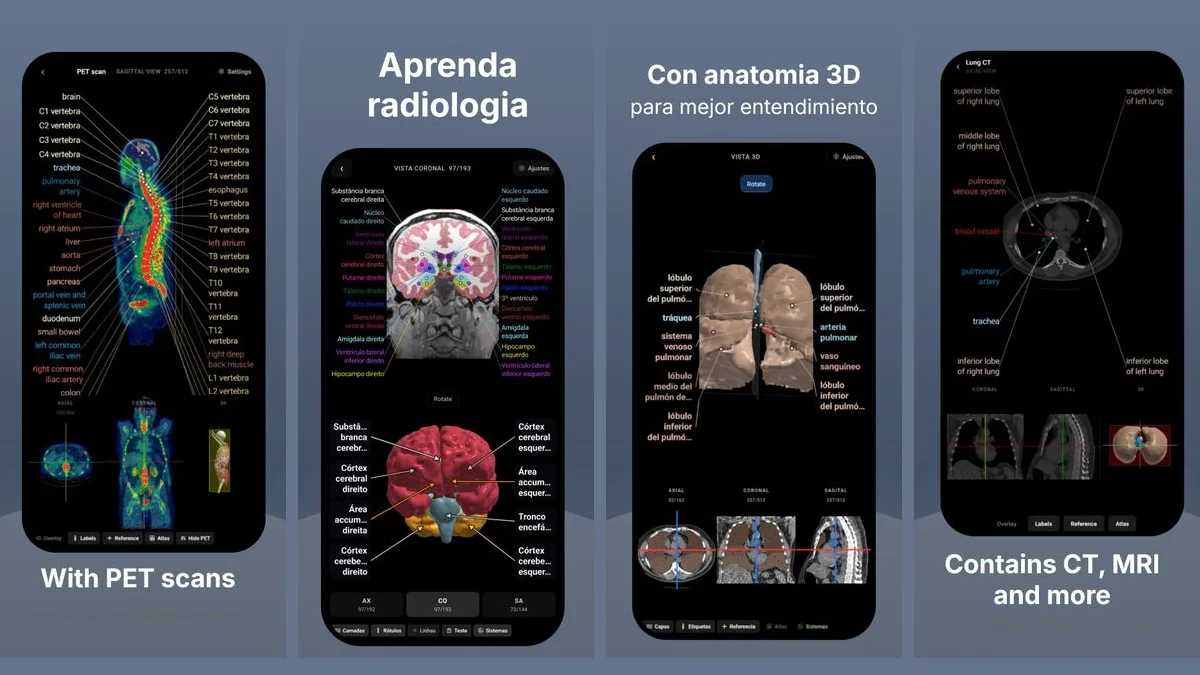
RadioAnato AI, the DecodeMed app, puts 3D anatomy, CT and MRI studies, histology slides and an AI tutor that answers on them in your pocket. Free to download for iPhone, iPad and Android.
A study routine with AI
- 10 minutes: one pattern on real tracings in the ECG atlas, Teaching view first, then Plain.
- 5 minutes: ask ChatGPT to explain the mechanism and quiz you.
- 5 minutes: add the tracing to Anki and review the cards that are due.
The full method is in how to learn ECG from scratch; more prompts in ChatGPT prompts for medical students.
Frequently asked questions
Can ChatGPT read an ECG?
It can describe some obvious features, but general chatbots are not reliable at ECG interpretation and can miss or invent findings. Do not use them to read patients’ ECGs.
What is the best AI to learn ECG?
Use real labelled tracings for the patterns, such as the DecodeMed ECG Atlas, and ChatGPT or NotebookLM to explain mechanisms and quiz you.
Will AI replace learning ECG?
No. Automated ECG reports exist, but doctors are expected to check them, and exams and wards still ask you to read the tracing yourself.
DecodeMed and its app, RadioAnato AI, are our own product, so weigh what we say about them accordingly. We have no affiliate or commercial relationship with the other tools listed.
Get RadioAnato AI, the DecodeMed app
Anatomy, radiology and histology in one app, on the App Store and Google Play.
About RadioAnato AI